How to Move to Italy as an American (Step-by-Step Guide)
Dreaming of moving to Italy? Here’s a complete step-by-step guide for Americans covering visas, costs, residency, healthcare, and real-life tips from someone who bought property in Italy.
3/1/20266 min read


*A little disclaimer: This post contains affiliate links. If you use these links to buy something, I may earn a small commission at no extra cost to you. Thanks!
If you’ve ever thought, “What if we just moved to Italy?” ~ you are absolutely not alone!
Between the food, breathtaking architecture, walkable towns with their gorgeous cobblestone streets, and a cappuccino that cost less than bottled water… Italy has a way of pulling at your heart. And yes, Americans can legally move to Italy.
It’s not impossible. It’s not reserved for the ultra-wealthy. And it’s not as complicated as the internet sometimes makes it sound. I know this because I bought a small apartment in Southern Italy as my vacation home (and someday my permanent home), and I was honestly shocked at how much easier it was than I expected.
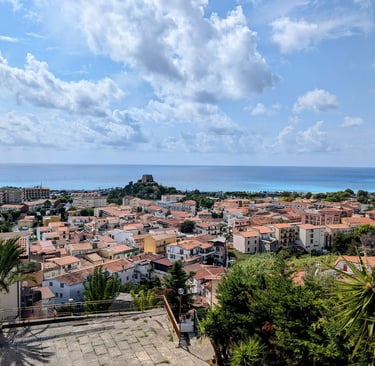
So let’s break this down step-by-step so you can stop wondering “what if” and start planning your life in Italy ~ cappuccino in hand, soaking up the sun on your balcony, while admiring your panoramic view of the sea... trust me, I know, because this is how I spend my days in Italy.
Step 1: Understand Your Visa Options
If you don’t already have EU citizenship, you’ll need a visa to stay in Italy longer than 90 days.
Here are the most common options for Americans:
1. Elective Residency Visa
Best for:
Retirement/pensions
Rental property income
Investments/dividends
Trust funds
Other passive income streams
You must show consistent passive income (not a remote job salary ~ that’s important).
2. Digital Nomad Visa (Newer Option)
Italy recently introduced a digital nomad visa, but requirements can change, and income thresholds apply.
This can be ideal if you:
Work remotely for a non-Italian company
Are self-employed online
3. Student Visa
If you enroll in an Italian university or language program.
4. Work Visa
These are harder to get because Italy has annual quotas (called “Decreto Flussi”).
5. Dual Citizenship (If You Qualify)
If you have Italian ancestry, you may qualify for citizenship by descent, which removes the visa process entirely.
I went through this process. It’s emotional, time-consuming… and yes, stressful, but worth it. The rules have changed, so be sure to research the most up-to-date info. You can read my full Italian Dual Citizenship journey here.
Step 2: Understand the Real Cost of Moving to Italy
People always ask: “How much money do I need to move to Italy?”
Here’s a realistic breakdown:
Visa fees: $100–$200+
Legal help (optional but helpful): $1,500–$5,000+
Flights: $600–$1,900 (depending on time of year & airline
Rental deposit: 2–3 months
Monthly rent:
Small town: $500–$900
Larger cities: $900–$2,000+
Utilities: $100–$300/month
Groceries: Often cheaper than in the U.S.
Healthcare: Public healthcare is very affordable once registered
Southern Italy is significantly more affordable than places like Milan, Rome, or Florence, and that’s part of why I chose it.
Step 3: Find Housing
You can:
Rent first (most common)
Buy property
Do short-term stays while exploring areas
Buying in Italy is far more accessible than most Americans think. Yes, there are €1 homes in some towns, but those require renovation commitments, which will cost you WAY more than just one euro.
However, you can still find:
Apartments under €100,000
Charming properties in small towns
Coastal homes at a fraction of U.S. prices
You’ll need:
Codice fiscale (Italian tax code)
Italian bank account or funds that can be wired
Real estate agent
Notary
Important note about the codice fiscale: for married women, Italy usually will use your maiden name. This can be tricky because all of your identification may be in your married name. You can get your codice fiscale under your married name, but if you ever need to present your birth certificate, your name won't match.
Another important thing to understand about Italian real estate is that you don’t choose one agent who shows you every property you’re interested in. Instead, you contact the listing agent for each individual home, and that agent schedules the showing with you.
Yes, this means you might meet ten or even twenty different agents during your search. And no, you are not obligated to any of them.
You simply buy the home you love, and that listing agent becomes the one who represents the sale. There are no hard feelings toward the others who showed you properties. This is completely normal in Italy, and they’re used to it.
Step 4: Apply for Residency
Once you arrive in Italy with your approved visa, your next step is applying for your Permesso di Soggiorno (residence permit). This is not optional. If you’re staying longer than 90 days, you must apply within 8 days of arrival. Here’s how it typically works:
1. Apply for the Permesso di Soggiorno
You apply through the local post office (yes, really). Ask for the “yellow kit,” or kit giallo, for the Permesso di Soggiorno. You’ll fill out the paperwork, attach copies of your passport, visa, and supporting documents, and pay the required fees.
After submitting it at the post office, you’ll receive:
A receipt (keep this with you—it acts as temporary proof of legal stay)
An appointment date at the local police headquarters (Questura)
2. Attend Your Questura Appointment
On your assigned date, you’ll go to the Questura (immigration office) in your province. They will:
Take your fingerprints
Review your documents
Confirm your residency request
Processing times vary ~ sometimes weeks, sometimes months. Italy runs on its own timeline.
3. Register at the Comune (Anagrafe)
Once you have your residence permit (or sometimes while it’s processing, depending on your visa), you’ll register your address at the local Comune (town hall).
This officially places you in the town’s resident registry (Anagrafe). A police officer may visit your home to verify that you actually live there ~ this is normal.
4. Healthcare Enrollment
Italy’s public healthcare system is called the Servizio Sanitario Nazionale (SSN). Whether you can enroll depends on your visa type. If you are a legal resident and fall into one of these categories, you can usually register:
Work Visa Holders
Self-Employment Visa Holders
Digital Nomad Visa Holders (if officially recognized and resident)
Family Reunification Visa Holders
Elective Residency Visa Holders (with conditions — see below)
EU Citizens / Dual Citizens (automatic right once resident)
Once you register residency at your local Comune, you can enroll at the local health authority office (ASL).
Important Distinction: Mandatory vs Voluntary Enrollment
There are two types of access:
1. Mandatory Enrollment (Free or income-based)
Usually for:
Workers
Self-employed
EU citizens
Family members
You pay through taxes, and coverage is essentially automatic once registered.
2. Voluntary Enrollment (Paid Annual Fee)
Common for:
Elective Residency Visa holders
Some students
Elective Residency visa holders typically must:
Have private health insurance initially
Then apply for voluntary SSN enrollment
Pay an annual contribution (often starting around €2,000+, income-based)
The amount can vary depending on declared income.
Student Visa Holders
Students often:
Must carry private insurance
ORCan enroll voluntarily in SSN for a lower annual fee (this amount can change)
Tourist Status
If you are in Italy as a tourist (under 90 days), you are not eligible for SSN enrollment. You must rely on travel insurance.
What Most Americans Don’t Realize
You don’t automatically get free healthcare just by moving to Italy. You must:
Have legal residency
Register your address
Enroll properly
But once enrolled, the system is extremely affordable compared to the U.S.
Step 5: Prepare for Cultural Adjustments
Moving to Italy isn’t just a paperwork process ~ it’s a mindset shift. Life here moves differently.
Shops close in the afternoon. Dinner starts later. Bureaucracy takes time. Emails may go unanswered. Appointments might start late. Things that feel urgent in the U.S. often… aren’t here. An Italian will say 3 pm and not show up until 4 pm (not all Italians, but it's true that they are known for not being punctual).
All of the cultural adjustments can be frustrating at first. But there’s another side to it. People linger at dinner. Kids play outside late. Sundays are for family. Meals are intentional. Walking replaces driving. Community replaces convenience.
You may need to adjust to:
Smaller refrigerators and less “stockpiling”
Fewer 24-hour services
No more drive-thru fast food
More face-to-face communication
Slower processes for almost everything administrative
You’ll need patience ~ and a sense of humor. But if what you’re really craving is a slower, more grounded lifestyle, these “adjustments” start to feel less like inconveniences and more like invitations.
Italy doesn’t revolve around productivity. It revolves around living. And that shift can be the most beautiful part of all. You learn to slow down, walk more, and cook often. You live more intentionally. And honestly? That’s the best part.
My best advice is to start spending more time in Italy. Take more trips, visit more cities, and become familiar with the areas you are considering moving to.
Is Moving to Italy Worth It?
If you want:
Slower living
Better work-life balance
Access to the EU (quick flights & trains)
Beautiful surroundings daily
Incredible food
A lifestyle shift
Then yes ~ it absolutely can be. But do your research. Plan wisely. And don’t romanticize it without understanding the paperwork side. Italy rewards patience.
If moving full-time feels overwhelming, consider:
Buying a small vacation property first (like I did)
Spending 1–3 months at a time
Visiting different regions before choosing
Italy doesn’t have to be all-or-nothing. Sometimes it starts with a long vacation, or a small apartment, or a citizenship application you’re not even sure will work.
And then suddenly… you’re holding keys to your new home and living la dolce vita.
Contact
You Can Follow Me Here:
© 2026. All rights reserved.


Benevento

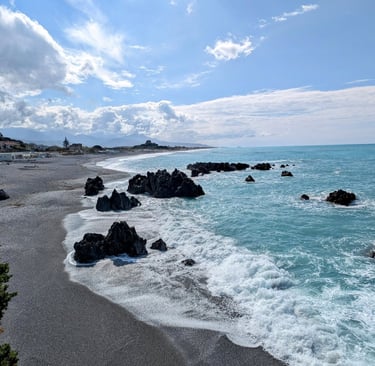
Scalea
Scalea