Italian vs Dialect Explained: A Traveler’s Guide to Understanding Italy
Confused about Italian vs dialect? Learn why Italians don’t always speak standard Italian, how dialects differ by region, and what travelers should expect when visiting Italy.
4/23/20265 min read
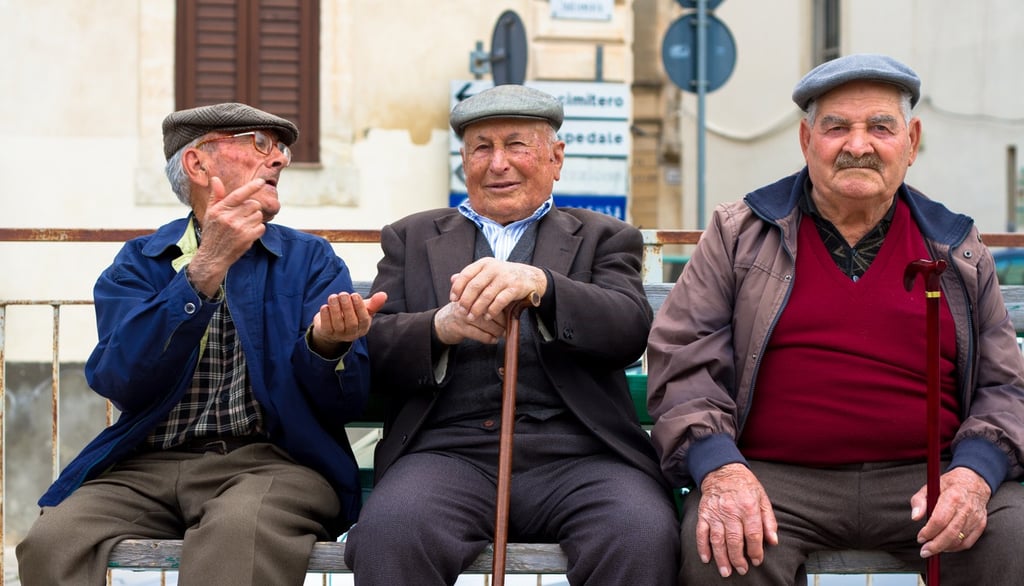
Pictured above: I guarantee you that these three Italian men are speaking dialect! I have encountered older Italians who speak only dialect, or at least they don't know Italian completely.
(*A little disclaimer: This post contains affiliate links. If you use these links to buy something, I may earn a small commission at no extra cost to you. Thanks!)
If you’ve ever landed in Italy expecting to hear beautiful, textbook Italian floating through the air… only to realize you don’t understand a word, you're definitely not alone.
This is one of the biggest surprises for first-time visitors. You might study Italian, practice phrases, maybe even feel pretty confident… and then suddenly you're standing in a café wondering, Wait… is this even Italian?
The truth is, what you're hearing might not be standard Italian at all. It could be a dialect or something that sounds like a completely different language.
Let’s break this down in a way that actually makes sense.
First, What Is Standard Italian?
Standard Italian (the Italian you learn in apps, language classes, or phrasebooks) is based on the Tuscan dialect, specifically from Florence.
This version became Italy’s official language after the country unified in 1861. Before that, Italy wasn’t one unified nation. It was made up of separate regions, kingdoms, and city-states, each with its own way of speaking.
So when Italy officially became one country, they needed a shared language. Tuscan was chosen because it was already widely respected thanks to famous writers like Dante.
But here’s the important part: People didn’t suddenly stop speaking their local dialects just because standard Italian became official. Families kept speaking what they always had at home, and many still do today.
And you know how Italian Americans on the East Coast have funny words for Italian foods and words? That is because their ancestors arrived speaking dialect, and those words molded into the Italian American "slang" you may hear (i.e., gabagool or stunad).
What Exactly Is an Italian Dialect?
When Americans hear the word “dialect,” we usually think of accents, like Southern, Boston, or New York accents.
But in Italy, dialect doesn’t just mean accent. Many Italian dialects have:
Completely different vocabulary
Different grammar
Different pronunciation
Words that don’t exist in standard Italian
Some dialects are so different that someone from northern Italy may not fully understand someone from the south.
That’s why linguists often say many Italian dialects are actually closer to separate languages, even though culturally they’re still called dialects.
Why Italy Has So Many Dialects
Italy has more dialects than most countries, and geography plays a big role in that.
Italy is filled with mountains, hills, and coastal towns that historically kept communities separated from each other. Before highways and trains, people stayed close to home, and languages developed independently.
Add in centuries of outside influence ~ from the French, Spanish, Greeks, Arabs, and Austrians ~ and you get layers of language mixed together over time.
The result? A country where language can change dramatically from one town to the next.
Examples of Dialects Across Italy
This is where it gets really interesting, because the differences are very real.
Neapolitan (Naples and Southern Italy)
In Naples and surrounding areas, many locals speak Neapolitan, which sounds very different from standard Italian.
You’ll hear it in everyday conversations, music, and even well-known traditional songs. Some locals switch between Italian and dialect depending on who they’re talking to.
If you’re visiting southern Italy ~ especially smaller towns ~ you’re very likely to hear dialect regularly.
Sicilian (Sicily)
Sicilian is heavily influenced by Greek, Arabic, Spanish, and Norman languages.
It has its own rhythm, vocabulary, and identity. In many Sicilian families, older generations still speak dialect at home, while younger people switch easily between Italian and dialect.
Calabrese (Calabria)
In Calabria, dialect is still deeply woven into daily life.
Many Calabrian dialects include words with Greek roots, particularly in southern areas. If you have family roots in Calabria, there’s a good chance your ancestors spoke dialect far more often than standard Italian.
Since I have a second home in Calabria, I decided to search for a good book that taught Calabrese... very hard to find. I ended up buying one on Amazon that is in Italian, but it explains the Calabrian dialect and gives examples. If you speak Italian, I recommend it: Come Imparare Il Calabrese in 30 Giorni.
Venetian (Venice Region)
Venetian is another well-known dialect with strong historical roots.
At one time, Venice was a powerful republic, and Venetian developed its own identity separate from standard Italian.
Even today, locals speak Venetian casually among friends or family.
When Italians Use Dialect vs Italian
This is something many travelers notice quickly once they spend time in Italy.
In general:
Standard Italian is used for:
School
Television
News
Formal settings
Speaking with strangers
Talking to tourists
Dialect is often used for:
Family conversations
Friends
Neighbors
Storytelling
Emotional expression
Many Italians grow up speaking both, switching between dialect and standard Italian depending on the situation.
And sometimes, they mix the two together in the same sentence.
What This Means for Travelers
Here’s the good news: If you learn standard Italian, you’ll still be understood almost everywhere. Most Italians can speak standard Italian when needed, especially when talking to visitors.
But hearing dialect around you? That’s completely normal. It doesn’t mean your Italian is bad. It doesn’t mean you're missing something. It just means you're experiencing real, everyday Italy.
I once ran into the old owner of the apartment I bought in Calabria, and we started chatting. He asked me something that was obviously in dialect, and when I looked confused, he kind of laughed and realized he accidentally spoke to me in Calabrese. He then reworded it in Italian, so I could understand.
Man, I wish I could speak Calabrese!
Why Dialects Make Italy Feel More Authentic
One of the things I love most about Italy is how deeply rooted everything feels ~ food, traditions, language, and family ties. Dialects are part of that. They carry history, identity, and local pride. In many towns, dialect isn’t just language; it’s culture.
You’ll hear it in markets, in family kitchens, and in conversations that feel animated and full of personality.
Sometimes you won’t understand a word… but you’ll still understand the emotion behind it. And that’s part of what makes Italy so special.
Should You Learn Dialect Before Visiting Italy?
No. Don't even bother, it's too hard! Just kidding.
But in all honesty, just focus on learning Italian. If you end up living in Italy or spending significant time in one town, then you can try to learn some of the local words. Otherwise, if you attempt to learn a dialect, you'll go to the next town over, and their dialect is different, so just spend your time and brain power on learning standard Italian.
And standard Italian is more than enough for travel. Even basic phrases go a long way and are always appreciated.
Dialect is something you experience and enjoy, not something you need to master. Think of it like hearing regional slang back home. You may not use it, but you recognize it as part of local culture.
Italian vs Dialect Isn’t About Right or Wrong
Italian and dialect exist side by side. Standard Italian connects the country. Dialects connect people to their roots.
So if you hear conversations in Italy that don’t sound like what you learned in class, don’t panic. You’re not lost. You’re just hearing Italy the way locals actually speak it... and it's absolutely beautiful.
Contact
You Can Follow Me Here:
© 2026. All rights reserved.


Benevento
Scalea
Scalea