Pompeii, Italy: The Ancient Roman City Frozen in Time
Uncover the fascinating history of Pompeii, must-see ruins, the famous brothel, travel tips, and everything you should know before visiting this incredible Ancient Roman archaeological site in Italy.
6/27/20266 min read


There are some places in Italy that leave you speechless, and Pompeii is definitely one of them.
No matter how many photos you've seen or documentaries you've watched, nothing prepares you for walking down actual Roman streets that people traveled nearly 2,000 years ago. The stone roads are still there. Portions of homes are still standing. Some buildings even have colorful frescoes that somehow survived one of history's most famous natural disasters.
It's honestly one of those places where history doesn't feel like history anymore ~ it feels real. So, if you're planning a trip to southern Italy, Pompeii deserves a spot on your itinerary. Here's why:
A Quick History of Pompeii
Pompeii was once a thriving Roman city located near the Bay of Naples. Around 20,000 people lived there, enjoying luxurious villas, public baths, theaters, markets, and bustling streets lined with shops and restaurants.
Then, in late summer or early fall of 79 AD, everything changed. 79 AD!!! It's mindboggling that there is still evidence of this city after so many years have passed.
Nearby, Mount Vesuvius erupted violently, sending ash, volcanic rock, and scorching gases over the surrounding area.
Within hours, Pompeii disappeared beneath several meters of volcanic ash. Ironically, that same ash preserved the city incredibly well.
Furniture, artwork, buildings, mosaics, and even everyday objects remained hidden underground for nearly 1,700 years before excavations began in the 1700s.
Today, Pompeii is one of the best-preserved ancient Roman cities anywhere in the world and gives visitors an astonishing glimpse into everyday life during the Roman Empire.
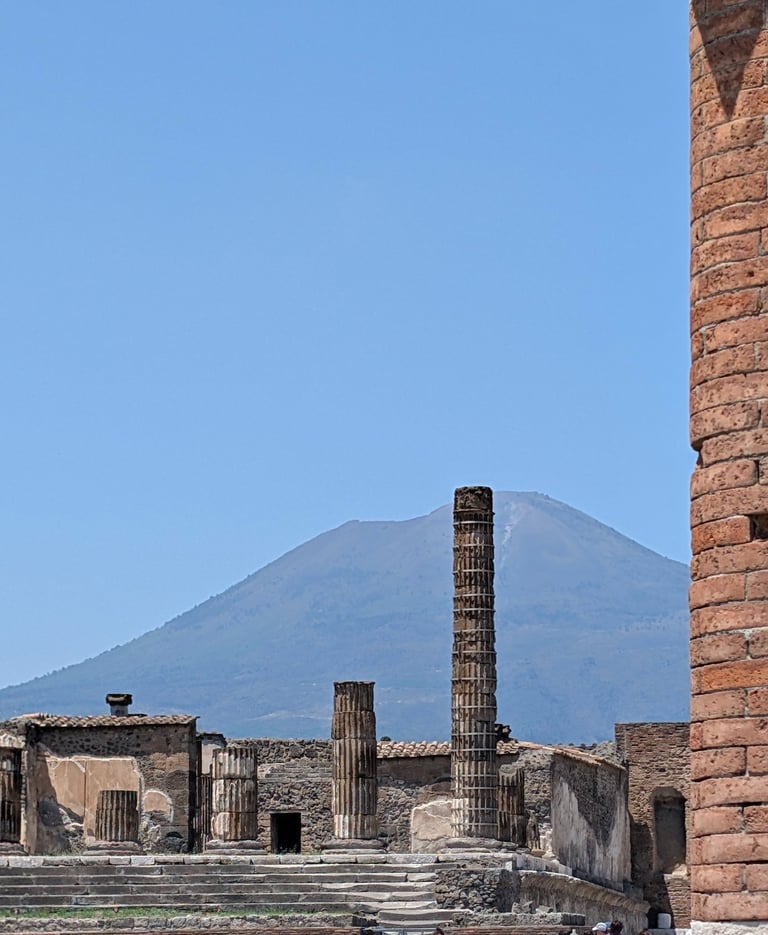
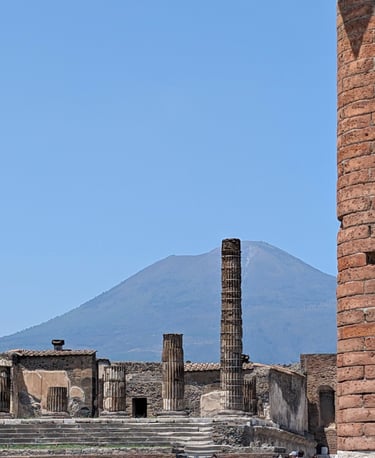
The ever-present shadow of Mount Vesuvius looms over Pompeii, forever tied to the city's unforgettable tragedy.
Interesting Facts About Pompeii
One of my favorite things about visiting Pompeii is realizing just how modern ancient Romans really were.
Here are a few fascinating things you might not know:
The city had running water through lead pipe systems.
Wealthy homes featured indoor plumbing and private gardens.
Streets had raised stepping stones that allowed people to cross when sewage and rainwater flowed through the roads.
Many original frescoes still retain vibrant colors after nearly 2,000 years.
Archaeologists created the famous plaster casts of victims by filling empty spaces left in the hardened ash where bodies had decomposed.
Those casts are incredibly moving to see in person. They serve as a powerful reminder that Pompeii wasn't just an archaeological site ~ it was someone's home. One of the casts we saw was of a 15-year-old girl... the same age as my daughter when we saw it.
Don't skip these plaster casts.
They're emotional, unforgettable, and easily one of the most powerful parts of visiting Pompeii.
Seeing the preserved positions of people and animals caught during the eruption brings the human side of history into focus in a way that books simply can't.
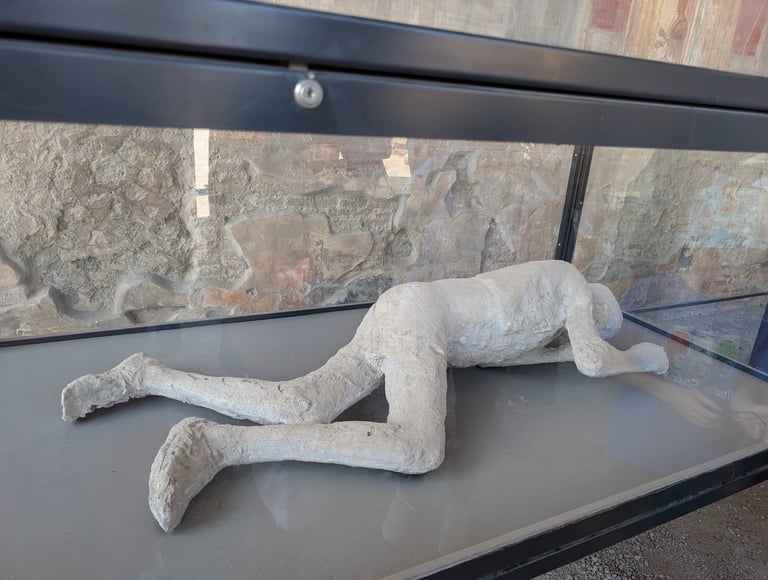
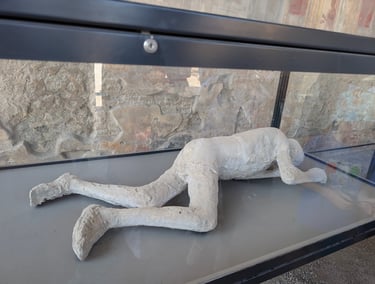
The plaster cast of the body of a teenage girl.
Tips for Visiting Pompeii
A little planning goes a long way here.
Wear comfortable shoes
This isn't the place for sandals or dress shoes.
The ancient streets are uneven, with original stone paving that can be slippery and difficult to walk on.
Arrive early
Pompeii is one of Italy's most popular attractions, especially during summer.
Getting there shortly after opening gives you cooler temperatures and fewer crowds. Better yet, buy your tickets online and reserve your time of arrival.
Bring water
The archaeological park is huge.
Depending on how much you want to see, you may walk five to eight miles throughout the day.
Especially during the warmer months, staying hydrated is essential.
Consider a guided tour
You can absolutely explore on your own, but a knowledgeable guide brings the ruins to life.
It's one thing to see old buildings ~ it's another to understand what each space was used for and imagine daily life nearly two thousand years ago.
Give yourself enough time
I wouldn't plan for less than three hours.
If you're someone who enjoys history, photography, or simply taking your time, you could easily spend most of the day here.
Visit on your way to or from the Amalfi Coast
Pompeii makes an easy day trip from Naples, Sorrento, or even the Amalfi Coast.
Many travelers combine Pompeii with a visit to Mount Vesuvius or nearby Herculaneum, another city buried during the same eruption that's often less crowded but equally fascinating.
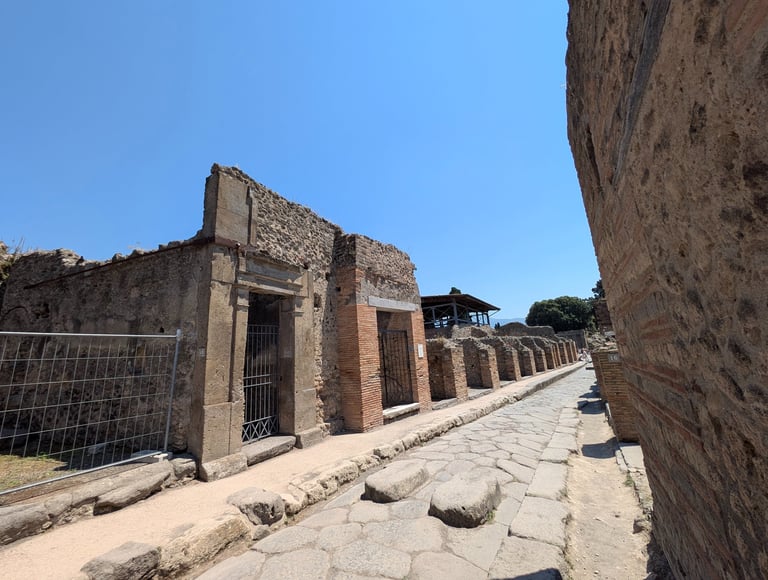
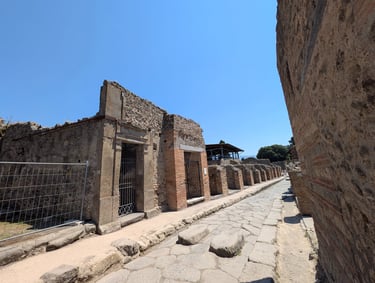
The cobblestone streets of Pompeii.
The Famous Brothel (Lupanar)
One of Pompeii's most talked-about buildings is the Lupanar, the city's best-preserved brothel.
Yes, it really was exactly what it sounds like.
While it may seem surprising today, prostitution was legal and common in ancient Rome.
The Lupanar contains several small stone rooms with built-in beds where clients met with prostitutes. What makes this building especially interesting are the remarkably preserved frescoes displayed above each doorway.
These paintings illustrated the services offered inside each room and likely helped customers who couldn't read.
It's certainly one of Pompeii's most unique attractions and offers an honest look at daily Roman life without the filters we often place on history. Click here to see a video I created of the brothel.
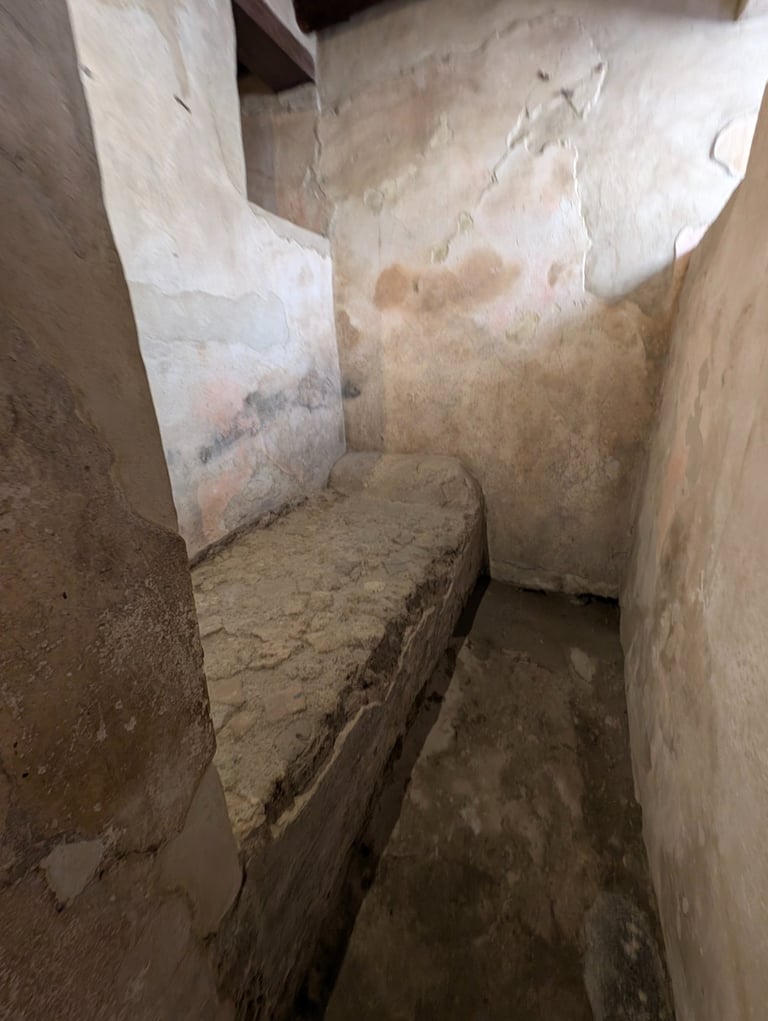
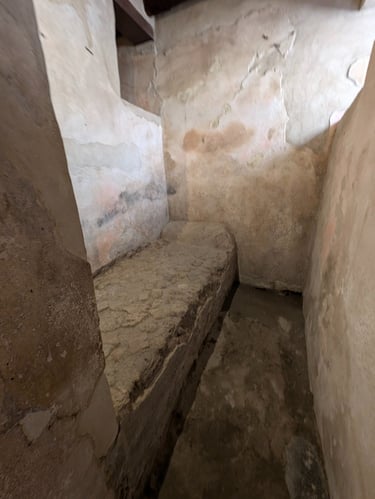
A bed in one of the brothel's bedrooms.
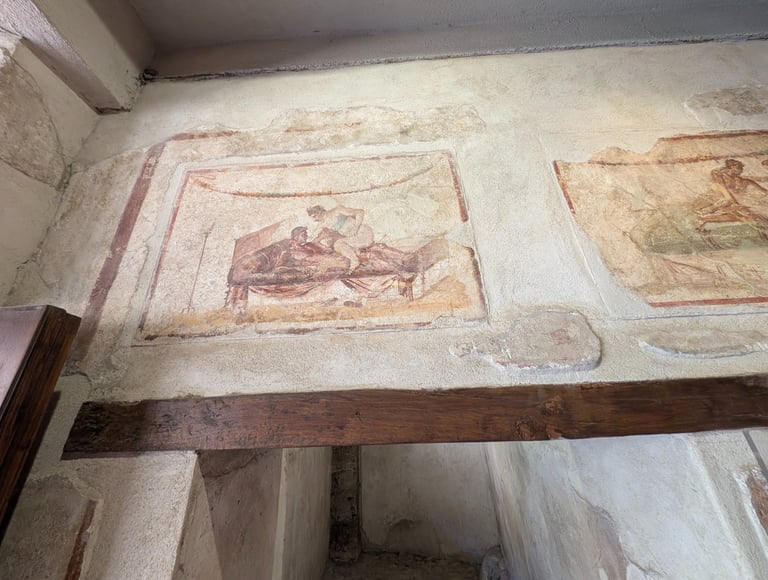
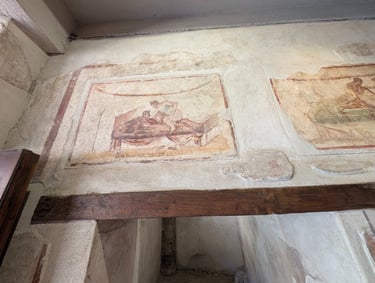
Images of what was offered inside the brothel bedrooms.
Pompeii Highlights You Shouldn't Miss
Pompeii is enormous. You could easily spend an entire day exploring and still not see everything.
If you're short on time, these are the places I'd put at the top of your list (including the lupanar).
The Forum
The Forum was the heart of ancient Pompeii.
This large open square served as the city's political, religious, and commercial center. Standing here, surrounded by ancient columns with Mount Vesuvius rising in the background, is one of the most iconic views in Pompeii.
The Amphitheater
Built around 70 BC, Pompeii's amphitheater is one of the oldest surviving Roman amphitheaters ever discovered.
Long before the Colosseum was built in Rome, thousands of spectators gathered here to watch gladiator games and public entertainment.
House of the Faun
This was one of the largest and wealthiest homes in Pompeii.
It's famous for its beautiful mosaics, elegant courtyards, and the bronze dancing faun statue that gives the villa its name.
Villa of the Mysteries
Located just outside the city walls, this villa contains some of Pompeii's most breathtaking frescoes.
The vivid red paintings remain remarkably preserved and are considered among the finest examples of Roman art.
The Stabian Baths
Romans took bathing very seriously.
The Stabian Baths show just how advanced Roman engineering was, with separate hot, warm, and cold bathing rooms that were heated using an ingenious underground system.
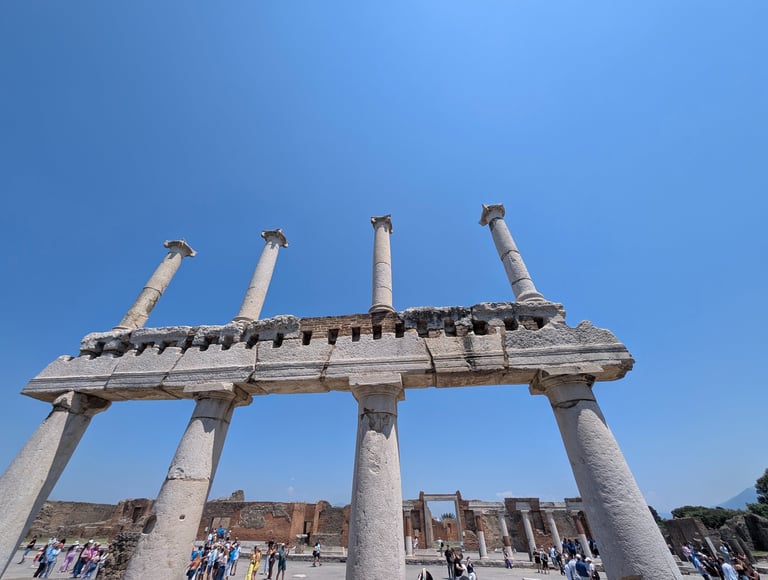
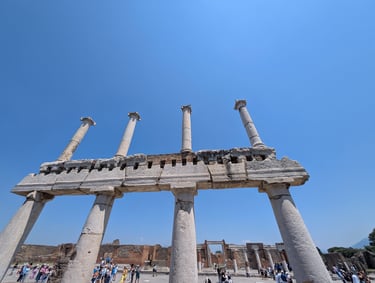
The Forum in Pompeii
The Basilica of Pompeii
One of the first buildings you'll notice near the Forum is the Basilica, and despite the name, it wasn't originally a church.
Built in the 2nd century BC, it served as Pompeii's courthouse and one of the city's most important public buildings, where legal matters, business deals, and political discussions took place.
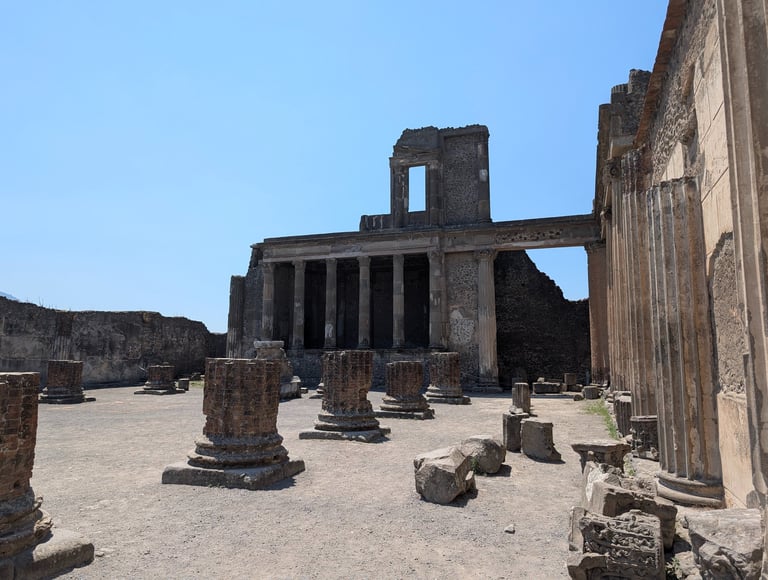
The Basilica of Pompeii
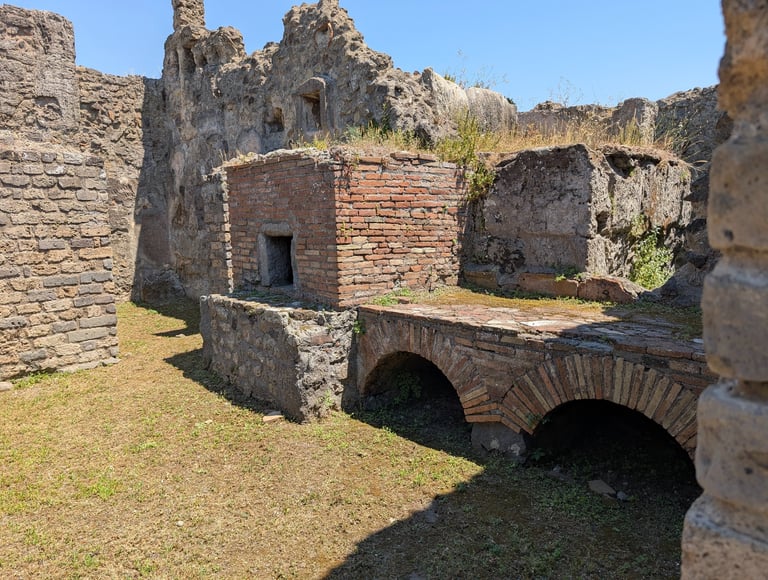
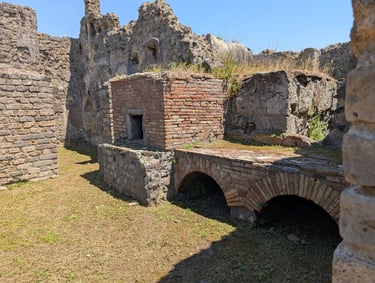
Bakery Oven
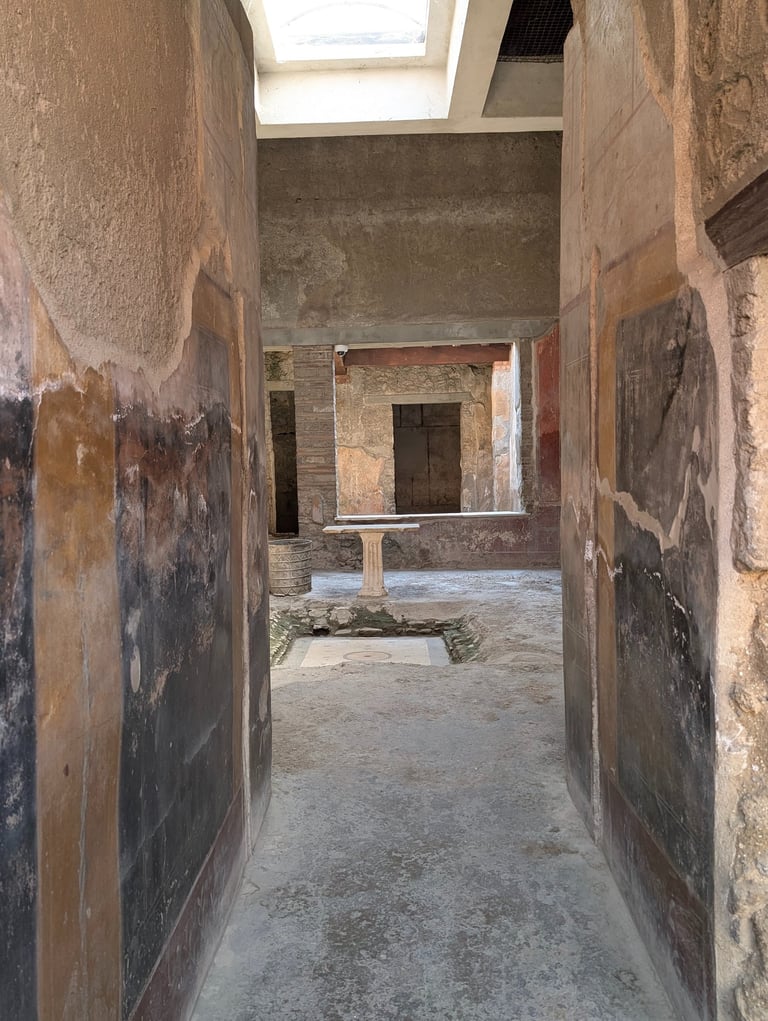
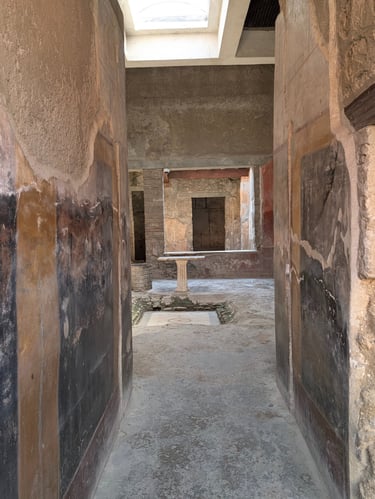
Entrance to a Home
Is Pompeii Worth Visiting?
Without a doubt. Pompeii is unlike anything else.
You're not looking at reconstructed ruins or museum displays. You're walking through an actual Roman city where people lived, worked, shopped, worshipped, and built their lives almost two thousand years ago.
It's fascinating, emotional, and honestly a little surreal.
Whether you're a history lover or simply curious about one of the world's most famous archaeological sites, Pompeii is one of those places you'll never forget.
If southern Italy is on your itinerary, don't miss it. It's one of those experiences that truly helps you appreciate just how layered Italy's history really is.
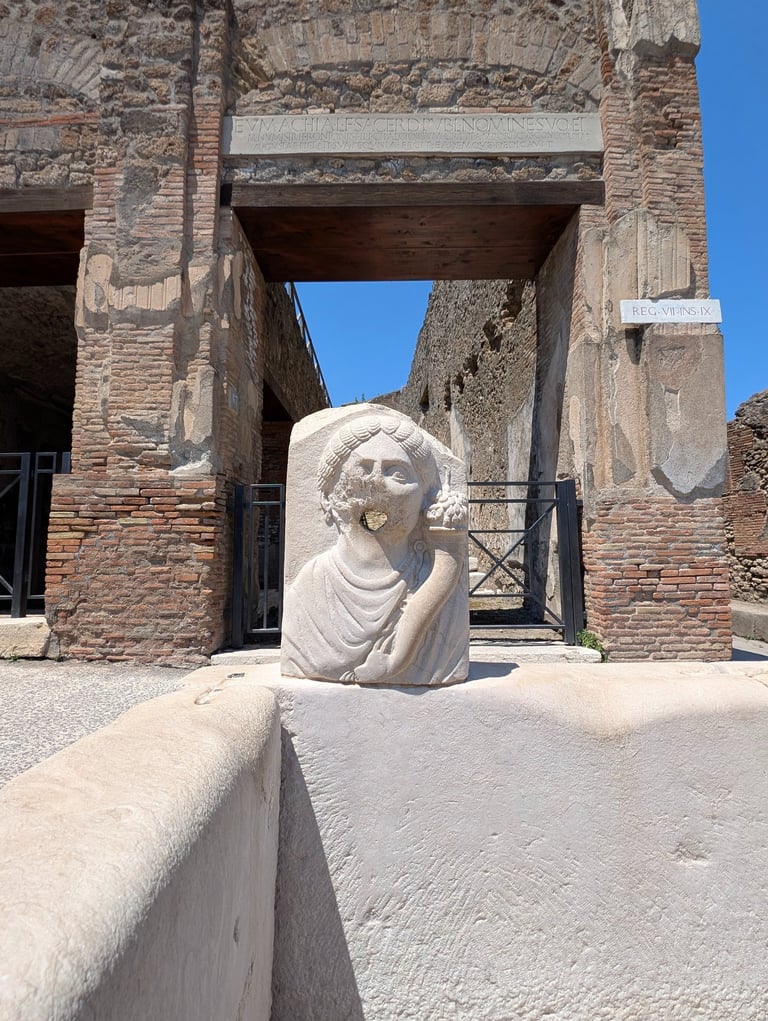
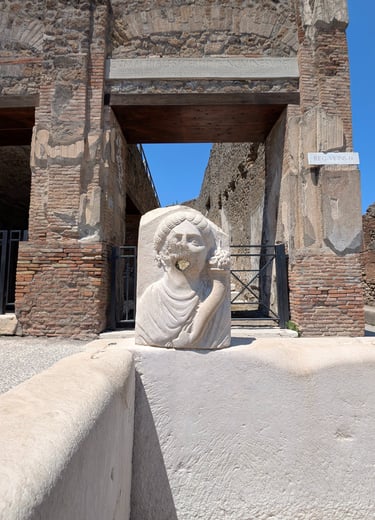
Remnants of a Carved Marble Fountain
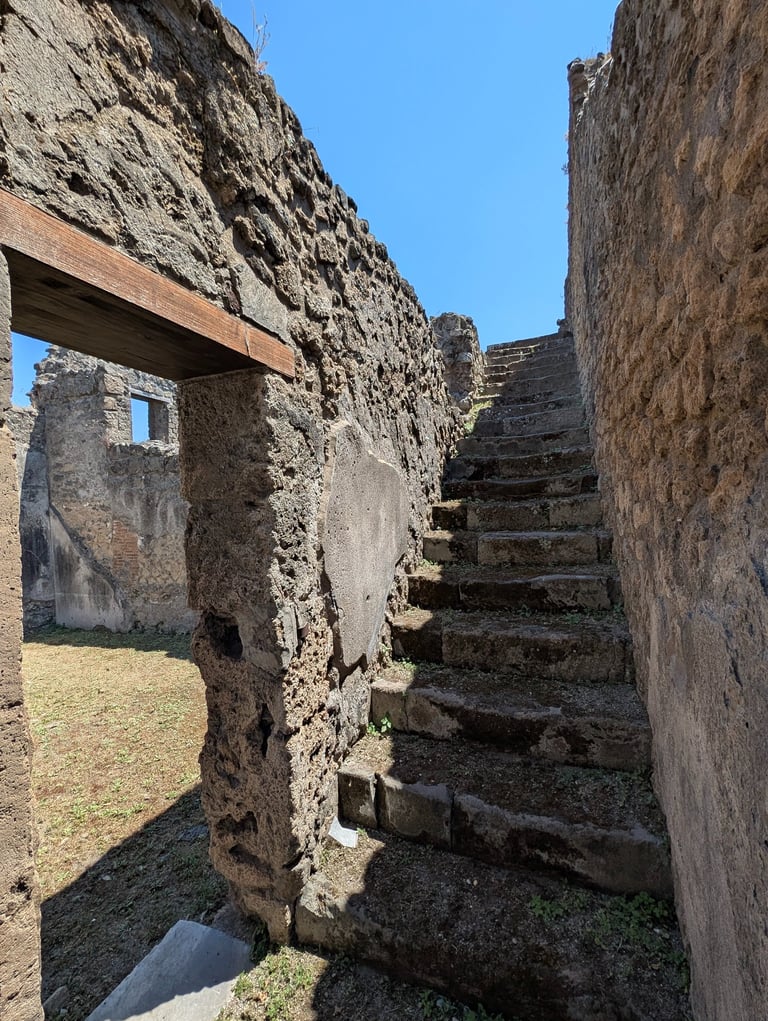
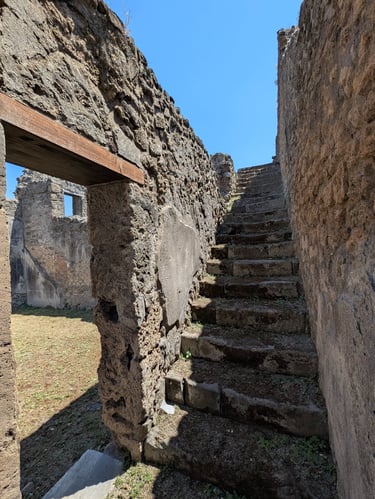
A Surprisingly Intact Stairwell
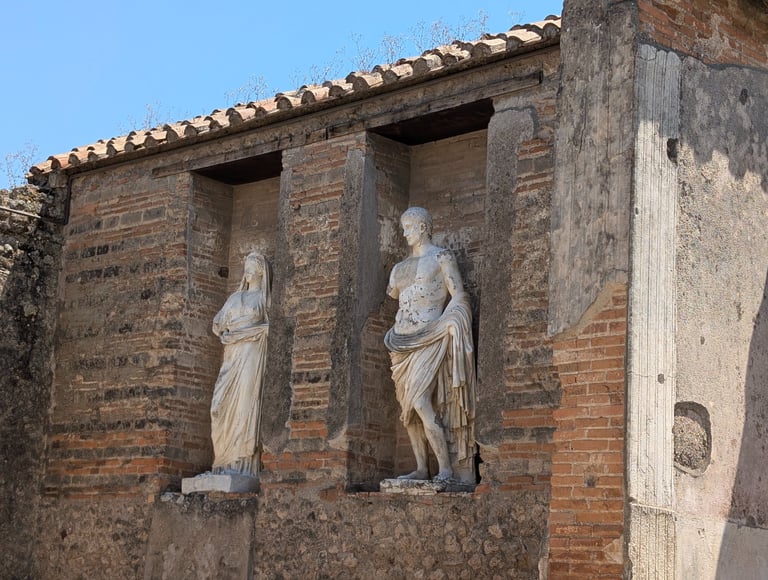
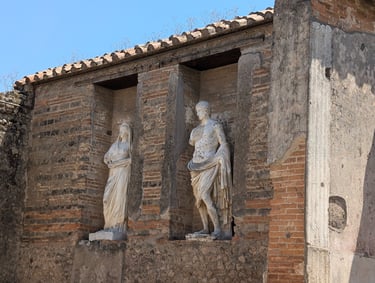
Statues in the Market Section of Pompeii
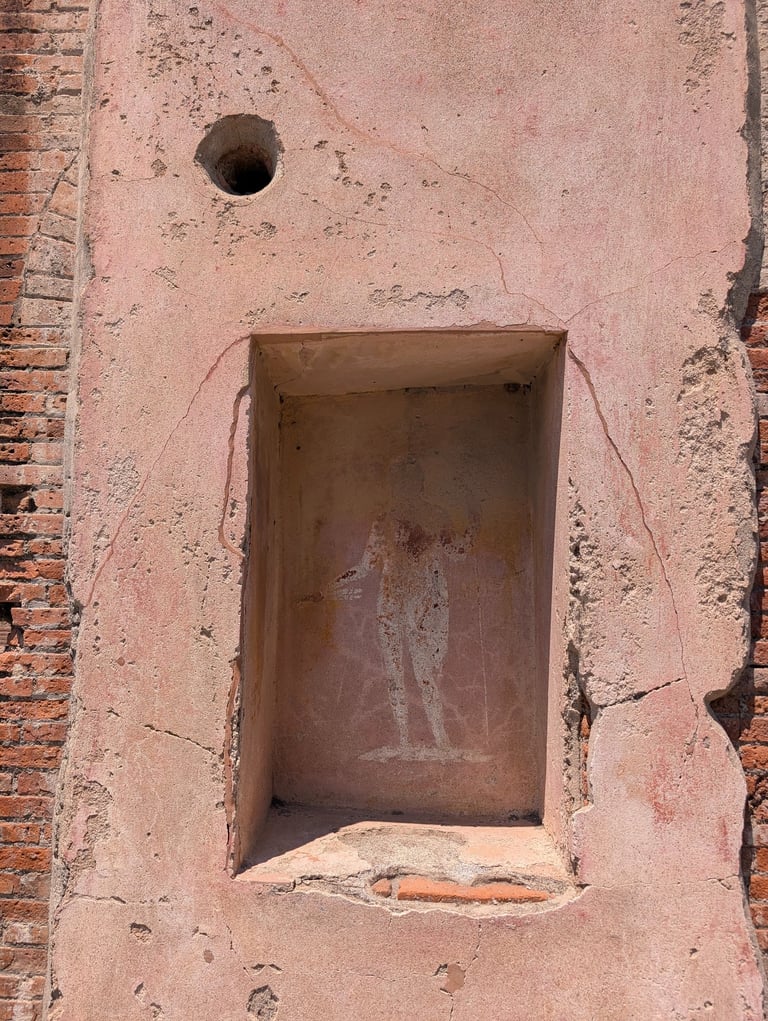
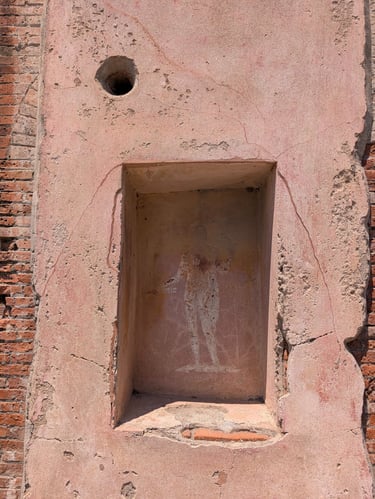
Ancient Roman Fresco


Imagine Walking These Streets 2000 Years Ago
Contact
You Can Follow Me Here:
© 2026. All rights reserved.


Benevento
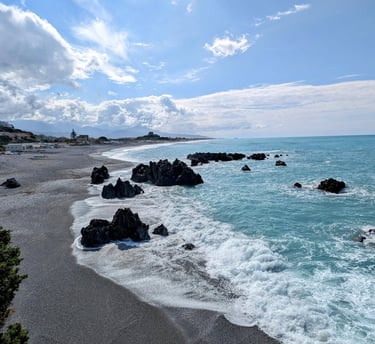
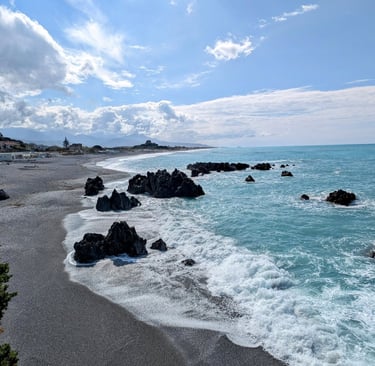
Scalea
Scalea