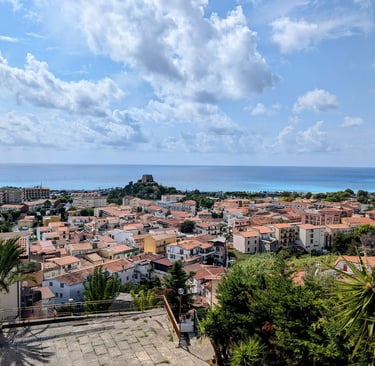
The Delightful Journey of Limoncello: History, Origin, and Homemade Recipe
Discover the history of limoncello, where it originated in Italy, the regional variations like cream and pistachio limoncello, and learn how to make authentic homemade limoncello step by step.
4/17/20265 min read


*A little disclaimer: This post contains affiliate links. If you use these links to buy something, I may earn a small commission at no extra cost to you. Thanks!
If you’ve ever traveled to southern Italy, chances are you’ve been handed a tiny chilled glass of limoncello at the end of a meal. Sometimes it shows up without you even asking.
It’s bright yellow, ice cold, and surprisingly strong, but somehow still refreshing.
The first time I tried limoncello, I didn’t realize there was an entire history behind it. I thought it was just a fun little after-dinner drink. Turns out, limoncello has deep roots in Italy, regional traditions, and even family recipes passed down for generations.
And once you learn the story behind it, that little glass of sunshine-yellow sweetness feels even more special!
What Exactly Is Limoncello?
Limoncello is a traditional Italian lemon liqueur made from:
Lemon peels
Alcohol
Sugar
Water
That’s it. Simple ingredients, but the flavor is bold and unmistakable.
It’s typically served:
Ice cold
In small glasses
After meals as a digestivo (a drink meant to aid digestion)
And if you’ve had it in Italy, you know, there’s nothing quite like the real thing.
Where Did Limoncello Originate?
Like many Italian traditions, the exact origin of limoncello is still debated. Several regions claim to be the birthplace.
But most historians agree that limoncello comes from southern Italy, particularly along the coastlines where lemons thrive.
The strongest claims come from:
Sorrento
Amalfi Coast
Capri
These areas are famous for their large, fragrant lemons, especially the Sorrento lemon, which has thick, aromatic skin perfect for making limoncello.
For generations, families in these regions made limoncello at home using lemons from their own trees. It wasn’t something bought in stores. It was something made in kitchens, shared with guests, poured into tiny glasses after long meals, and that tradition still exists today.
Italian Cities Known for Limoncello
While limoncello is now popular all over Italy (and the world), a few places are especially known for it.
Sorrento
Sorrento is often considered the heart of limoncello production.
The region is famous for its lemons, known as Femminello di Sorrento, which are prized for their intense aroma and thick peels.
Walk through Sorrento, and you’ll see lemon groves everywhere ~ along hillsides, behind homes, and even surrounding small shops selling locally made limoncello.
I highly recommend booking a limoncello making and tasting experience in Sorrento. You'll learn how to make it with a pro and then take those skills back home with you.
Amalfi Coast
The Amalfi Coast is another major limoncello hub. Here, lemons grow dramatically along steep coastal terraces overlooking the sea.
Some of the lemons grown here are massive ~ far larger than what you’d find in a typical grocery store. Many small producers still make limoncello using traditional methods passed down through families.
Capri
The island of Capri also claims limoncello roots. Many locals proudly say the drink was first served to guests here as a gesture of hospitality.
Whether that’s true or not, Capri certainly helped popularize limoncello with tourists over the years.
The Many Types of Limoncello You’ll Find Today
Traditional limoncello is bright yellow and made purely from lemon zest. But over time, new variations have become popular, especially in southern Italy.
Some of the most common types include:
Classic Limoncello
This is the original.
Bright, citrusy, slightly sweet, and served ice cold.
It’s still the most widely recognized version.
Crema di Limoncello (Cream Limoncello)
Cream limoncello is exactly what it sounds like ~ limoncello made with milk or cream.
The result is:
Smoother
Creamier
Slightly richer
Less sharp than traditional limoncello
It almost tastes like a lemon dessert in liquid form.
Pistachio Liqueur (Often Found Alongside Limoncello)
While not technically limoncello, pistachio liqueur is often sold right next to it in southern Italy. Especially in regions like Sicily, pistachio versions are incredibly popular.
They’re:
Creamy
Nutty
Sweet
Almost dessert-like
Hard to resist once you try them.
Other Fruit Variations
You’ll also find liqueurs made using:
Oranges (Arancello)
Mandarins
Lemons blended with herbs
Even melon or berries
They follow the same process just using different fruit peels.
Why Limoncello Became So Popular Worldwide
Limoncello used to be something you mostly found in Italian homes. Now, it’s everywhere. Part of that popularity comes from tourism.
Visitors fell in love with the drink while traveling through southern Italy and wanted to recreate the experience back home.
It also helps that limoncello feels like sunshine in a glass. Bright, fresh, simple. And surprisingly easy to make yourself.
Authentic Homemade Limoncello Recipe (Step-by-Step)
Making limoncello at home is easier than most people think.
It just requires patience and good lemons.
Ingredients
10 large organic lemons
750 ml high-proof alcohol (vodka or grain alcohol)
2½ cups water
2 cups sugar
Tip: Organic lemons are important since you’ll be using the peel.
Step 1: Wash and Peel the Lemons
Wash the lemons thoroughly.
Using a vegetable peeler, remove only the yellow part of the peel.
Avoid the white pith ~ it makes the limoncello bitter.
Place the peels into a large glass jar.
Step 2: Add the Alcohol
Pour the alcohol over the lemon peels.
Seal the jar tightly.
Store it in a cool, dark place.
Let it sit for 10–14 days, gently shaking the jar once a day.
Over time, the liquid will turn bright yellow ~ that’s exactly what you want.
Step 3: Make the Sugar Syrup
After the steeping period:
Combine water and sugar in a saucepan.
Heat gently until the sugar dissolves completely.
Let the syrup cool completely before using.
Step 4: Strain the Lemon Peels
Strain the alcohol mixture through a fine mesh strainer.
Remove all lemon peels.
What you’ll have left is bright, lemon-infused alcohol.
Step 5: Combine and Bottle
Mix the cooled sugar syrup with the lemon alcohol.
Stir well.
Pour into glass bottles and seal tightly.
Step 6: Let It Rest
Allow the bottled limoncello to rest for at least one week before drinking.
This helps the flavors blend.
Step 7: Serve Ice Cold
Store limoncello in the freezer.
Serve it in small chilled glasses. You can buy some really cute limoncello glass sets with labels on Amazon, or when you're in Italy, buy some gorgeous hand-painted sets.
And enjoy it slowly, just like they do in Italy.
Limoncello Is More Than Just a Drink
Limoncello isn’t just something you sip after dinner. It’s part of Italian hospitality. A tradition. A small gesture that says, “Welcome to Italy and stay a little longer.”
Whether you’re enjoying it on a sunny terrace in southern Italy or pouring a homemade batch for friends at home, limoncello has a way of bringing people together.
Once you’ve had the real thing (or made your own) you’ll never look at lemons the same way again.
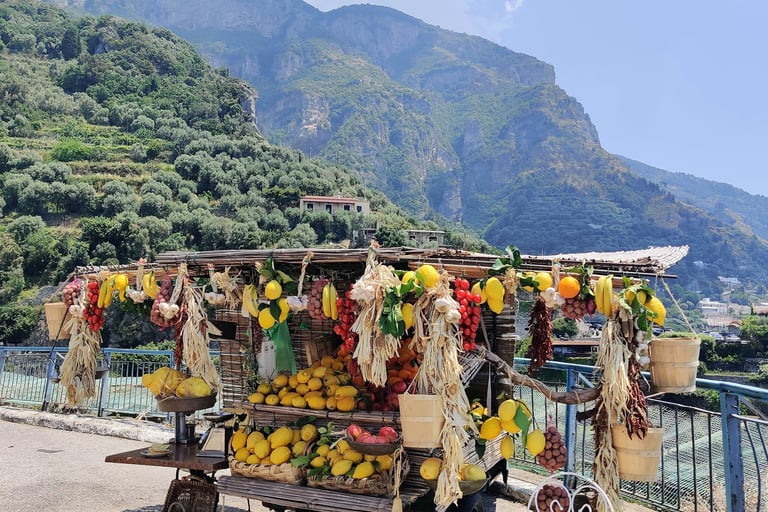
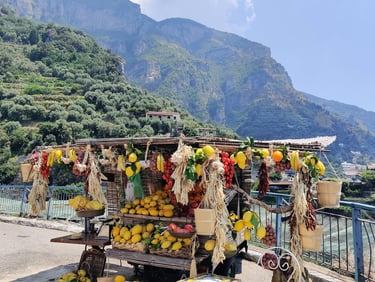
Lemon & produce cart that sits at a scenic overlook stop along the Amalfi Coast. I bought two lemons from the man, and they were the biggest and sweetest lemons I've ever tasted!
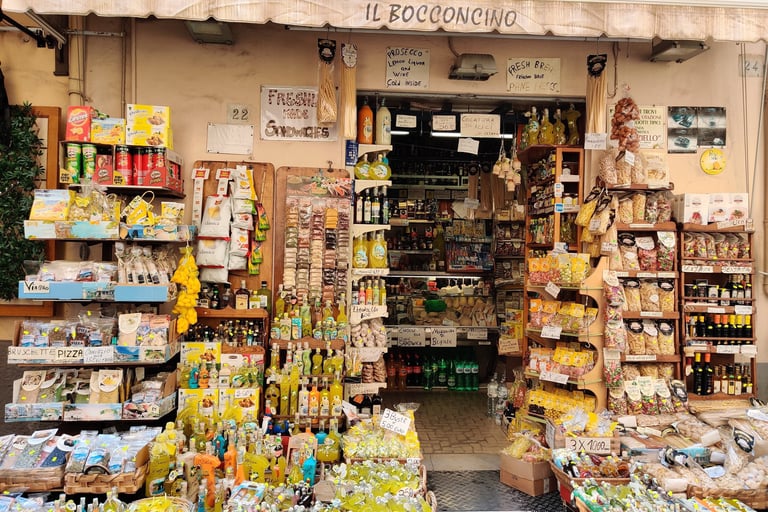
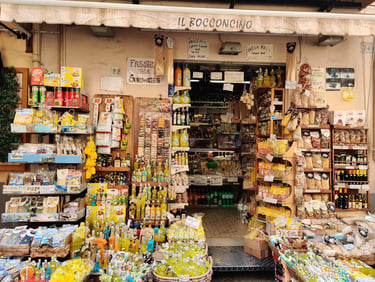
An adorable souvenir shop in Sorrento full of limoncello and lemon products.
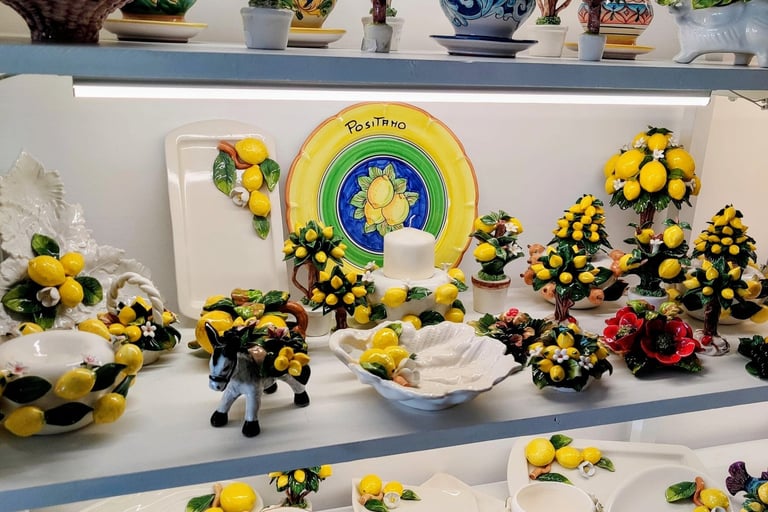
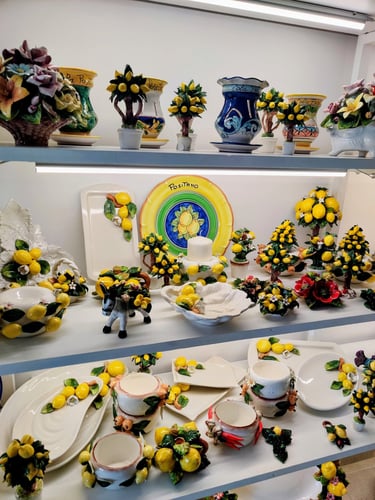
Gorgeous lemon ceramics in Sorrento. I bought that cute donkey!
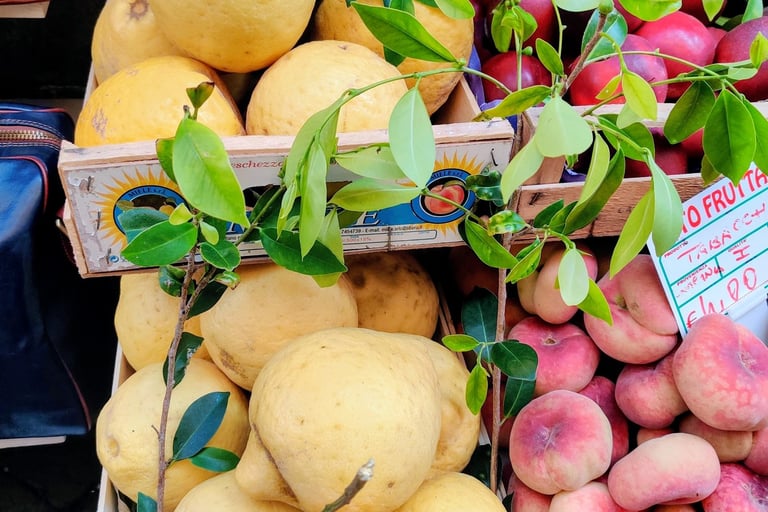
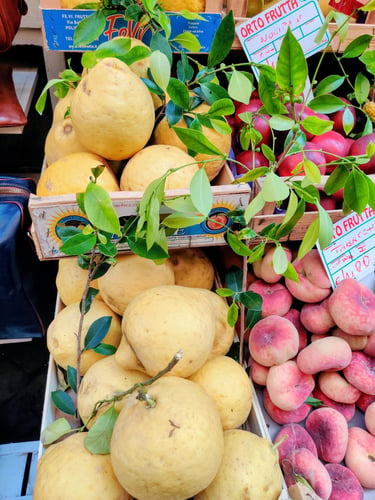
Ginormous lemons in the Amalfi Coast.
Contact
You Can Follow Me Here:
© 2026. All rights reserved.


Benevento
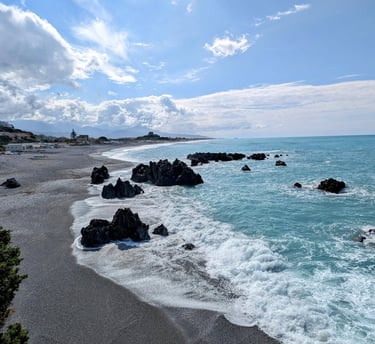
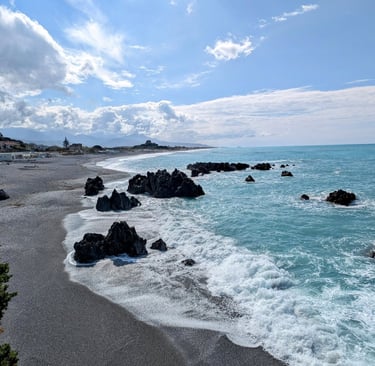
Scalea
Scalea