The History of Calabria, Italy: A Quick Guide to Calabria’s Fascinating Past
Discover the fascinating history of Calabria, Italy, from ancient Greek settlements to modern Calabrian culture, traditions, and language. A quick and interesting guide to Calabria’s incredible past and where to visit.
4/20/202610 min read
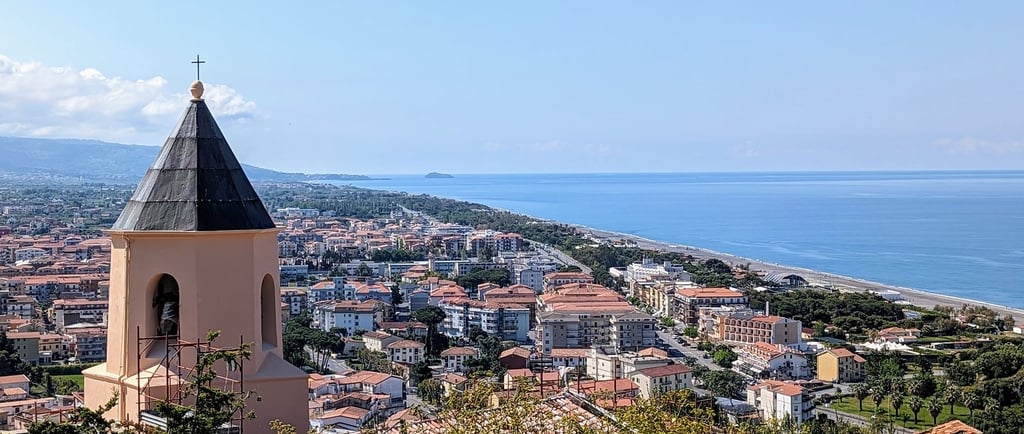
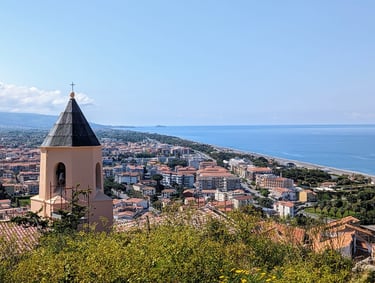
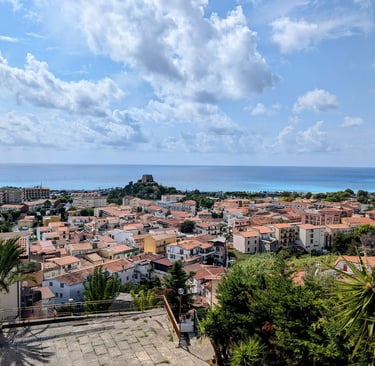
Pictured above: The incredible view from the Norman Castle ruins in Scalea, Calabria
*A little disclaimer: This post contains affiliate links. If you use these links to buy something, I may earn a small commission at no extra cost to you. Thanks!
If you’ve ever traced your roots to southern Italy, or just fallen down the rabbit hole of researching the region, you’ve probably come across Calabria and wondered… what’s the story behind it?
Because Calabria isn’t just another region in Italy. It’s one of those places where history feels layered ~ like every group that passed through left a little piece behind.
And trust me, a lot of people passed through.
From ancient Greeks to medieval kingdoms, Calabria has seen centuries of change, invasion, culture shifts, and survival. But somehow, through it all, the region kept its strong identity, traditions, and, yes… its famously complicated dialect.
Let’s walk through a quick but interesting history of Calabria, Italy, without turning it into a boring history lecture. It is honestly my favorite region, not just because my family originated from there, but because the people, culture, food, and beaches are absolutely unforgettable!
Where Is Calabria in Italy (And Why Its Location Mattered So Much)
First, let’s talk geography, because Calabria’s location explains a lot about its past.
Calabria sits at the very tip of southern Italy, basically forming the “toe” of the country’s boot. It’s surrounded by the Ionian Sea on one side and the Tyrrhenian Sea on the other.
That sounds beautiful, and it is, but historically, it also made Calabria incredibly important.
It sat directly along major Mediterranean trade routes. Anyone sailing between Greece, Sicily, and mainland Italy would pass close to Calabria. That meant trade, opportunity… and invasions.
Lots of invasions.
Calabria’s Greek Beginnings (Yes, It Was Greek Before It Was Italian)
One of the most surprising things about Calabria’s history is that it wasn’t originally Roman, it was Greek.
Around the 8th century BC, Greek settlers arrived along Calabria’s coast and founded colonies that became part of what was known as Magna Graecia, meaning “Greater Greece.”
These Greek settlements brought:
Philosophy
Architecture
Trade systems
Olive oil and wine production
Greek language and culture
Some cities in Calabria were so successful that they were comparable to mainland Greek cities in wealth and power.
Even today, you can still find traces of Greek influence in Calabrian traditions, food, and language. In certain small mountain villages, variations of ancient Greek dialects were spoken well into modern times. That’s how deep those roots go.
The Roman Era: Calabria Joins the Empire
Eventually, like much of southern Italy, Calabria became part of the Roman Empire.
When Rome took control, the region became an important agricultural hub. Calabria produced:
Olive oil
Grain
Wine
Timber
Roman roads connected Calabria to other regions, improving trade and communication. Some of those ancient roads shaped the travel routes still used today.
But after the fall of Rome… things got a little complicated.
The Era of Invasions (Calabria Changed Hands a Lot)
After the Roman Empire declined, Calabria entered one of its most chaotic periods.
Over the centuries, it was ruled (or, more frankly put, invaded) by:
Byzantines
Lombards
Arabs
Normans
Spanish
French
Each group left something behind, whether it was architecture, religion, or traditions. That’s part of what makes Calabria so fascinating. Its culture isn’t tied to just one influence, there are layers upon layers.
You’ll see Byzantine-style churches, Norman castles, and Spanish-inspired traditions scattered throughout the region. And somehow, through all that change, Calabria maintained its own strong identity.
The Norman Period and Medieval Calabria
During the Middle Ages, the Normans (warriors from northern Europe) took control of much of southern Italy, including Calabria.
They built:
Castles
Fortified towns
Religious centers
Many of the hilltop towns you see in Calabria today were strengthened or expanded during this time. These towns weren’t just scenic, they were defensive. Living higher up made it easier to spot approaching threats from the sea. Which, historically speaking, happened more often than anyone would have liked.
Spanish Rule and the Struggles of Southern Italy
Later, Calabria came under Spanish rule, which lasted for centuries.
This period shaped a lot of Calabria’s agricultural and social structure. Large estates controlled by wealthy landowners became common, while many ordinary people lived as farmers or laborers.
Life was hard, and poverty became widespread in many rural areas. This eventually led to one of the biggest turning points in Calabria’s history.
The Great Migration: Why So Many Calabrians Left
If your family roots trace back to Calabria, there’s a good chance your ancestors were part of the massive migration that happened in the late 1800s and early 1900s.
During this time, thousands of Calabrians left Italy in search of better opportunities.
They traveled to:
The United States
Argentina
Canada
Australia
Many were escaping poverty, natural disasters, and limited economic opportunities.
And yet, even after leaving, they carried their traditions, recipes, dialects, and family values with them, something you still see today in Calabrian communities around the world. My grandma would say things that I never realized were dialect until I started learning Italian.
Calabria’s Language: More Than Just Italian
One of the most interesting parts of Calabrian culture is its language. Yes, Italian is spoken, but many locals also speak Calabrese, a regional dialect that varies from town to town.
Some versions of Calabrese still include:
Greek influences
Spanish words
French elements
It’s not just an accent, it’s a blend of centuries of history. And in certain areas of southern Calabria, there are even small communities where Greek-based dialects are still preserved today. That alone says a lot about how deep Calabria’s historical roots run.
Calabrian Culture: Strong, Proud, and Traditional
If there’s one thing Calabria is known for, it’s strong traditions. Family plays a central role in daily life, and many customs have been passed down for generations.
Some of the most recognizable parts of Calabrian culture include:
Traditional festivals honoring patron saints
Handmade foods and preserved recipes
Seasonal celebrations tied to agriculture
Music and folk dancing
And of course… the FOOD (the best part in my opinion)!
Calabria is especially known for bold flavors and spicy dishes, thanks to its love of chili peppers ~ something that has become a defining symbol of the region.
Calabria Today: A Region Rooted in the Past
Modern Calabria is still ingrained in its history.
Many towns remain small and traditional, with cobblestone streets, centuries-old churches, and views that haven’t changed much in generations.
You’ll still find:
Ancient ruins
Medieval villages
Traditional festivals
Families gathering around long tables
It’s the kind of place where history doesn’t just sit proudly in museums ~ it emerges in everyday life.
Why Calabria’s History Still Matters Today
What makes Calabria so interesting isn’t just how old it is ~ it’s how resilient it’s been.
Despite centuries of invasions, economic struggles, and migration, the region kept its traditions, culture, and identity intact.
That’s why so many people feel a strong emotional connection to Calabria ~ even generations after their families left.
Where to Visit in Calabria: My Personal Recommendations
If you’re planning a trip to Calabria (or just dreaming about one) there are a handful of places that I always recommend. Some are popular for a reason, and others feel like little hidden gems that still haven’t been overrun with tourists.
And one of the best things is that many of these towns are connected by train, which makes exploring the region a lot easier than people expect.
Here are the spots I always tell people to add to their Calabrian itinerary.
Riviera dei Cedri (Scalea, Diamante, San Nicola Arcella & Santa Domenica Talao)
If I had to pick one stretch of Calabria that feels like a perfect mix of beach, tradition, and small-town life, it would be the Riviera dei Cedri. And this is why I purchased my second home here.
This area runs along the northern Tyrrhenian coast and is known for its crystal-clear water, scenic coastline, and towns that feel both lively and laid-back at the same time. The name comes from the cedro (citron fruit) grown here, which has been part of local agriculture for generations.
Scalea
Scalea is one of those towns that gives you a little bit of everything ~ beaches, history, and a rustic old town (centro storico) that climbs up the hillside. Just make sure you can manage stairs... lots of stairs. But what's great about this town is that it is very walkable and flat in most places.
It’s also one of the easiest places to use as a base because of the Scalea–Santa Domenica Talao train station, which sits on the main railway line connecting major cities like Naples, Rome, and Reggio Calabria.
That train line makes it surprisingly simple to explore nearby towns without needing to drive. Scalea also has plenty of shopping and restaurants that stay open all year.
If you stay in Scalea, I recommend the Grand Hotel de Rose. You can choose a room that has a balcony with breathtaking views of the town, beach, and sea.
Diamante
Diamante is colorful, artsy, and honestly one of the most fun coastal towns in Calabria. It’s famous for its murals ~ you’ll find artwork painted all over the town walls, turning the entire place into an outdoor gallery.
It’s also an easy hop from Scalea. The train ride between the two towns takes roughly 10 minutes, making it perfect for a relaxed day trip.
San Nicola Arcella (Home to One of Calabria’s Most Famous Beaches)
This small coastal town sits just a few minutes north of Scalea, but it feels completely different ~ more dramatic, more scenic, and honestly, one of the most photogenic places in northern Calabria.
The biggest reason people search for San Nicola Arcella is Arcomagno Beach.
This beach is famous for its natural rock arch that frames a hidden cove of bright turquoise water. It’s one of those places that looks unreal in photos and then somehow looks even better in person. You usually reach it by walking a scenic coastal path, which makes the whole experience feel a little like discovering a secret.
Santa Domenica Talao (Incredible Mountain Town)
If your family roots trace to Calabria ~ or you just want that true mountain village feel ~ Santa Domenica Talao is worth the short drive inland.
It’s a classic hilltop town overlooking the coast, and many visitors pair it with coastal stays in Scalea. The town is connected to the coast by road and sits just a short distance from the main railway stop that serves both communities.
If you want to experience authentic Calabria (not just beach life) this is the kind of place that gives you that. And don't forget to visit my favorite restaurants, Bistrot Enoteca Del Corso & The Fig.
Tropea (One of Calabria’s Most Famous Towns)
Tropea is easily one of the most searched and talked-about destinations in Calabria ~ and once you see photos of it, you’ll understand why.
The historic center clings dramatically to the cliffs above the sea, with views that honestly look like postcards. Just off the shore, you’ll find the famous Sanctuary of Santa Maria dell’Isola, one of the most recognizable landmarks in southern Italy.
Tropea makes an excellent base if you want:
Beautiful beaches
Walkable historic streets
Restaurants and lively summer energy
Easy train access to other towns
Where to Stay in Tropea
If you’re staying here, look for:
Small family-run B&Bs
Hotels with sea-view balconies
Tropea has plenty of charming accommodations, especially during the summer months when it becomes one of Calabria’s busiest destinations.
Pizzo (Small Town Charm & Famous Dessert)
Pizzo feels quieter than Tropea but still full of personality.
It’s best known for:
Its historic castle overlooking the sea
The cave church carved into rock
And most importantly… Tartufo di Pizzo, the famous gelato dessert that originated here
It’s also conveniently connected by train to both Tropea and other coastal towns, making it an easy addition to any Calabria itinerary.
Reggio Calabria (A Bigger City With History and Culture)
Reggio Calabria feels very different from the smaller towns, and that’s part of what makes it worth visiting.
This is the largest city in the region and sits right across from Sicily, with views of Mount Etna visible on clear days.
It’s also home to one of Calabria’s most important cultural highlights:
The National Archaeological Museum
The famous Riace Bronzes, ancient Greek statues discovered off the coast
You’ll also find shopping, restaurants, and a beautiful waterfront promenade that locals love.
Where to Stay in Reggio Calabria
If you’re flying into the region, this city makes a convenient starting point.
Look for:
Hotels near the waterfront
City-center accommodations
Places close to the train station if you plan to travel along the coast
Scilla (A Must-See Coastal Gem)
If there’s one extra town I always tell people to add, it’s Scilla. This place feels like something out of a movie, especially the fishing district of Chianalea, where houses sit right against the water.
It’s often listed as one of the most beautiful villages in Calabria, and it’s an easy train stop along the coastal railway, making it ideal for a day trip.
Many travelers consider Scilla one of the highlights of southern Calabria because of its mix of mythology, fishing traditions, and scenic beauty.
Gerace (A Stunning Hilltop Village)
If you want to experience the medieval side of Calabria, Gerace is unforgettable.
This hilltop town is known for:
Stone streets
Massive historic churches
Incredible views of the coastline below
It feels like stepping back in time, and it offers a completely different experience from the coastal towns.
Getting Around Calabria: Yes, the Train Actually Connects These Towns
One of the biggest surprises for visitors is how useful the train can be along the Tyrrhenian coast.
The main railway line runs from Naples all the way down to Reggio Calabria, connecting many of the region’s most popular towns ~ including Scalea, Diamante, Tropea, and Pizzo.
That means you can:
Stay in one town
Take short day trips to others
Avoid driving if you prefer
Smaller inland villages, like Santa Domenica Talao, usually require a short drive or local transportation from the nearest station, but coastal travel by train is very doable.
I usually fly into Rome because it is the cheapest option for me, then take the train down to Calabria. Depending on which train I can catch, it's either a little over two hours or up to 5 hours or more.
Why These Places Are Worth Visiting
What I love most about Calabria is that it doesn’t feel poised and polished in the same way as some of Italy’s more tourist-heavy regions. It feels real. Like, no English spoken (in many places), authentic. And I love that!
You’ll find cliffside towns, quiet mountain villages, family-run restaurants, and beaches that still feel like locals’ secrets.
And whether you’re visiting because of family roots, curiosity, or just a love for southern Italy, these places give you a true glimpse into what Calabria is all about... and it's absolutely beautiful!


The famous town of Tropea
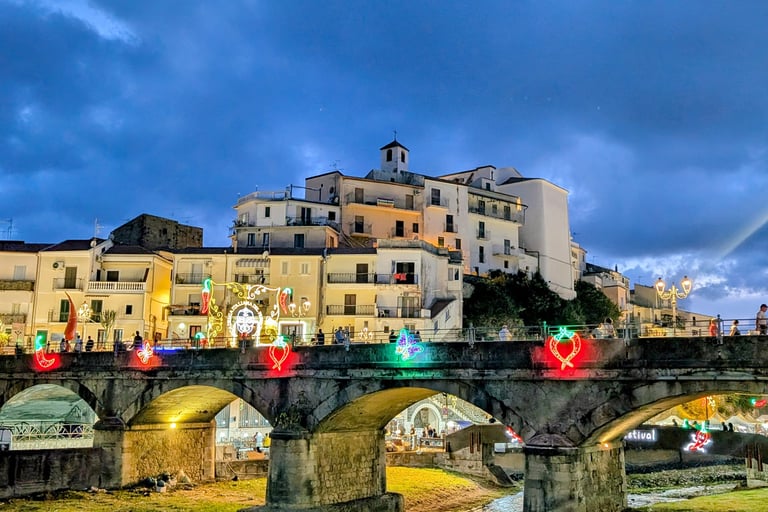
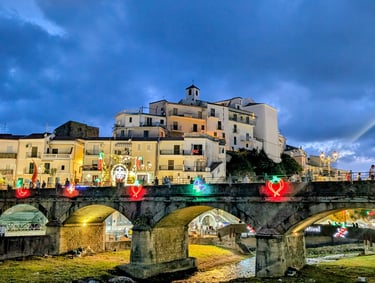
Diamante - Known for its murals & home of the annual Peperoncino Festival
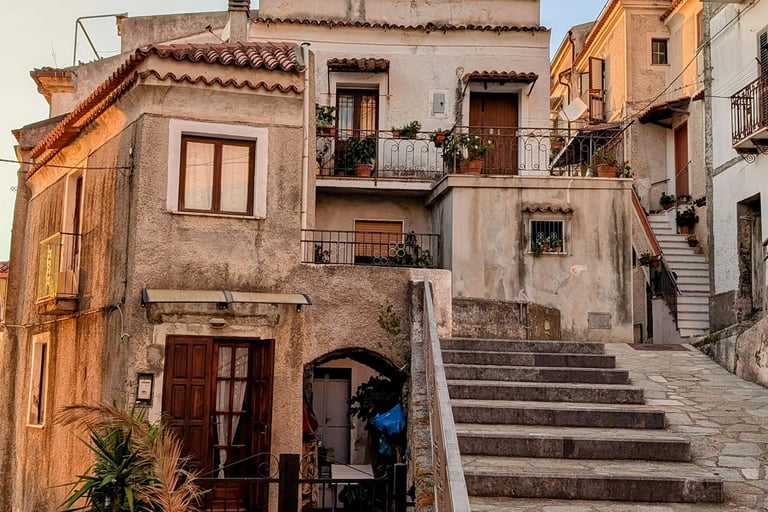
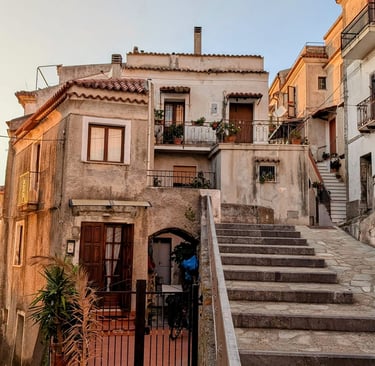
A fairytale village: San Nicola Arcella


The impressive lungomare in Reggio Calabria
Contact
You Can Follow Me Here:
© 2026. All rights reserved.


Benevento
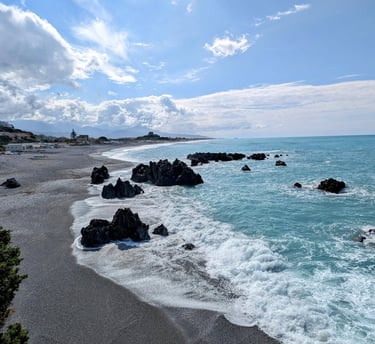
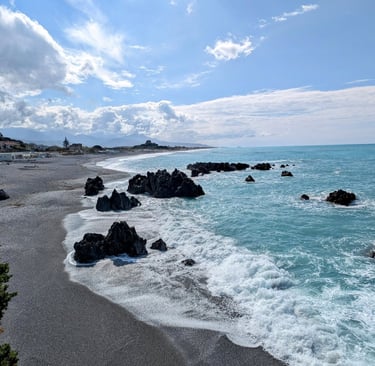
Scalea
Scalea