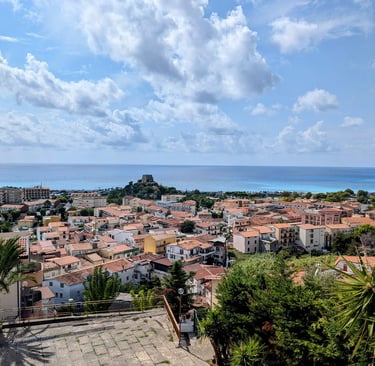
Visiting Churches in Italy: Dress Codes, Etiquette & What to Expect
Learn about church culture in Italy, including dress codes, opening hours, Mass schedules, photography rules, religious traditions, and etiquette tips for tourists. Everything you need to know before going to Italy.
11/14/202614 min read


*A little disclaimer: This post contains affiliate links. If you use these links to buy something, I may earn a small commission at no extra cost to you. Thanks!
If you've ever traveled through Italy, you've probably noticed that churches are just about everywhere. Some are enormous cathedrals that take up an entire piazza, while others are small neighborhood churches that you might easily walk past without realizing they're there. You'll find them in the middle of busy cities, along narrow cobblestone streets, and tucked into little villages throughout the countryside.
And if you're anything like me, you probably find yourself wanting to step inside just to see what's there. Italian churches are beautiful, often filled with incredible artwork, architecture, frescoes, sculptures, and centuries of history. But there's something else worth understanding before visiting. Churches in Italy aren't simply historic buildings or tourist attractions. They're also places of worship that remain an important part of everyday life for many Italians.
So whether you're visiting St. Peter's Basilica in Rome, the Cathedral of Santa Maria del Fiore in Florence, or stumbling upon a tiny church in a Calabrian village, there are a few things you should know about Italian church culture before you go.
From what to wear in Italian churches and when to visit to photography rules and attending Mass, here's what travelers should know about visiting churches in Italy so you don't make the same mistakes that so many tourists make when going into Italian churches.
1. Dress Appropriately When Visiting Churches in Italy
This is probably one of the most important things to know, especially if you're traveling during the summer. Italy can get incredibly hot, and when you're spending the day sightseeing, shorts, tank tops, sleeveless dresses, and sandals are probably what you'll want to wear. There's nothing wrong with that, but you may run into a problem when you decide to visit a church.
Most churches in Italy expect visitors to dress modestly. The general rule is to have your shoulders and knees covered. Here are a few things to keep in mind:
Shoulders should be covered. Avoid tank tops, spaghetti straps, and sleeveless shirts when entering a church.
Knees should be covered. Very short shorts, mini skirts, and dresses above the knee may not be permitted.
Avoid low-cut or revealing clothing. Choose something that is appropriate for a place of worship.
Remove your hat. Both men and women should generally remove hats when entering a church.
No beachwear. Even if you're visiting a church near the coast, leave the swimsuit and beach cover-up for the beach.
Italian church dress requirements can vary from one church to another, but it's always better to be prepared than to arrive at the entrance and be turned away. Some of the larger and more popular churches have staff checking visitors' attire, and the rules can be strictly enforced. They actually do kick people out, so it's important.
St. Peter's Basilica in Vatican City is one of the places where you'll want to pay particular attention to the dress code. Visitors must have their shoulders and knees covered, and those who don't meet the requirements may be denied entry.
Italian church travel tip: Keep a lightweight scarf or shawl in your purse or day bag. It's an easy way to cover your shoulders when you're wearing a sleeveless top or dress. You can also bring a lightweight cardigan if you prefer. This is especially helpful when sightseeing during the warmer months. You never know when you'll come across a beautiful little church that you want to explore!
2. Understand Church Opening Hours and Timetables
One thing that can surprise visitors in Italy is that churches don't necessarily follow the same opening hours as museums or other tourist attractions. You can't always assume that a church will be open simply because you're visiting during the middle of the day. Many churches have specific hours for visitors, while others close during certain parts of the day. Some smaller churches may only open for Mass, scheduled services, or special occasions.
In many parts of Italy, particularly in smaller towns and villages, you may find churches closed around lunchtime and reopened later in the afternoon. This can vary considerably depending on the location.
Mass schedules also play a role in when visitors are allowed inside. For example, a church may welcome tourists throughout the morning but limit sightseeing access during an afternoon or evening service.
Here are a few things I recommend:
Check the church's official website before planning your visit.
Look for posted opening hours at the entrance.
Check Mass times, especially if you're visiting on a Sunday.
Don't assume a church will be open all day.
If a particular church is important to your itinerary, plan your visit around its schedule.
Another thing worth remembering is that smaller churches may not have a website or an online schedule. If you're visiting a small village, you may need to check the posted hours or ask someone locally. It's also worth remembering that churches can close unexpectedly for religious celebrations, weddings, funerals, or other events. A little planning can save you from making a trip across town only to find the doors locked.


Pictured above & below: St. Peter's Basilica in Vatican City


3. Be Respectful During Mass and Other Religious Services
Italy has a strong Catholic history, and religious celebrations remain an important part of life in many communities. Even if you're visiting a church primarily to see the architecture or artwork, remember that someone else may be there to pray.
If you happen to arrive while Mass is taking place, it's important to be respectful. Here are a few things to keep in mind:
Keep your voice low or remain silent.
Don't walk around taking pictures while people are praying.
Avoid walking in front of people who are attending the service.
Don't interrupt the service to get a better look at something.
Follow any instructions from church staff.
If visitor access is restricted during Mass, wait until the service has ended.
Some larger churches, like the Cathedral of Santa Maria del Fiore (the Florence Duomo), have designated areas for visitors during religious services, while others may restrict sightseeing altogether.
You may also notice that people stop inside a church for just a few minutes to pray, light a candle, or sit quietly. They aren't necessarily attending a scheduled service. Sometimes they're simply taking a moment out of their day. Even in busy cities filled with tourists, churches can still be places where people step away from the noise and activity of everyday life.
Italian church travel tip: The Duomo in Florence has some incredible places nearby where you can sit for an aperitivo with the Duomo as your viewpoint. Here is a YouTube video to show how grand it truly is!


Pictured above & below: The Duomo in Florence


4. Can You Take Pictures Inside Churches in Italy?
In many Italian churches, photography is allowed, but there isn't one universal rule. Some churches allow visitors to take pictures without a flash, while others prohibit photography altogether. Certain chapels, artwork, and religious spaces may have additional restrictions.
The Vatican Museums and Sistine Chapel, for example, have specific photography rules. Personal photography is permitted in most areas of the Vatican Museums, but photography and filming are prohibited inside the Sistine Chapel.
St. Peter's Basilica also has rules that visitors should check before taking pictures, particularly during religious celebrations. Before pulling out your phone or camera, look for signs at the entrance or inside the church.
A few general guidelines:
Never use flash unless photography rules explicitly allow it.
Don't photograph people who are praying without their permission.
Avoid taking pictures during Mass.
Don't use tripods or selfie sticks unless specifically permitted.
Follow any signs indicating that photography is prohibited.
And even when photography is allowed, be mindful of the people around you. I know it's tempting to photograph everything because some of these churches are absolutely breathtaking, but remember that they're not just photo opportunities.
Check out this video of the Basilica di Santa Maria Maggiore in Rome, Italy. It is absolutely breathtaking! It's one of my favorite churches in the world.


Pictured above & below: The Basilica di Santa Maria Maggiore in Rome, Italy


5. You Don't Have to Be Catholic to Visit Italian Churches
This is something worth mentioning because some travelers may feel unsure about entering a Catholic church if they aren't Catholic. You absolutely do not have to be Catholic to visit churches in Italy.
Visitors of different religions, backgrounds, and beliefs are generally welcome to explore churches, admire the architecture, and learn about their history. You can appreciate the beauty of a church without participating in a religious service.
Of course, there are certain areas that may be restricted to worshippers or reserved for specific religious activities, but that doesn't mean you can't enjoy visiting these incredible places. Just remember that you're entering someone's place of worship, so being respectful of the surroundings and the people inside goes a long way.
6. What Is the Difference Between a Chiesa, Duomo, Basilica, and Cattedrale?
As you travel through Italy, you'll notice that churches have different names. You may see signs for a Chiesa, Duomo, Basilica, or Cattedrale. Although they all refer to religious buildings, they don't necessarily mean the same thing.
Here's a quick explanation:
Chiesa (Church)
This is the general Italian word for church. You'll find everything from small neighborhood churches to large, elaborate places of worship referred to as a chiesa.
Duomo (Cathedral)
A duomo is generally the principal church of a city or town. Many of Italy's most famous churches are called duomos, including the Duomo di Milano in Milan and the Duomo di Firenze in Florence.
The word duomo is commonly used for a cathedral, although the terminology doesn't always correspond exactly to its formal ecclesiastical status.
Basilica (Basilica)
A basilica is a church that has been given a special designation by the Catholic Church. Some of Italy's most famous religious buildings are basilicas, including St. Peter's Basilica in Vatican City and the Basilica of St. Francis in Assisi.
Cattedrale (Cathedral)
A cattedrale is the cathedral, or principal church, of a diocese. It is the church where the bishop's official seat, called the cathedra, is located. You'll sometimes see both duomo and cattedrale used when referring to the same church.


The Basilica of Saint Francis of Assisi in Umbria


Chiesa di Sant'Antonio in the picturesque town of Ortisei


The Chiesetta di San Giovanni in South Tyrol


Basilica di Santa Croce in Lecce, Puglia
7. Many Churches Are Free to Visit, But Not All
One of the nice things about visiting churches in Italy is that many of them are free to enter. You can walk into a beautiful historic church, admire its architecture, and spend some time exploring without paying an admission fee.
However, there are exceptions. Some churches charge admission for certain areas, while others have separate tickets for museums, crypts, bell towers, domes, or special exhibits.
For example, visiting the main interior of St. Peter's Basilica is generally free, but climbing the dome requires a separate ticket. Some famous churches also have admission fees or timed-entry requirements for visitors.
Here are a few things to remember:
Check whether general admission is free.
Look for separate fees for museums, chapels, or other areas.
Find out whether advance reservations are required.
Check whether photography requires an additional fee.
Bring a little cash in case you want to leave a donation.
And speaking of donations, you'll sometimes see small donation boxes inside churches. These contributions help support the maintenance of the building and its religious activities. Donations are generally optional, but leaving a little something is a nice gesture if you've enjoyed your visit.
I have stepped into some of the most incredible free churches that were actually more impressive than some of the more popular paid-entry ones.


I can't for the life of me remember where I took this picture, but it's one of my favorites from my Italian church visits
8. You May See People Lighting Candles and Leaving Donations
One thing you'll notice in many Italian churches is a small area with candles. People light candles as part of their personal prayers, often asking for blessings, remembering loved ones, or expressing gratitude.
You'll sometimes see small electric candles alongside traditional wax candles, particularly in churches where fire safety is a concern. There may be a small suggested donation to light one.
You'll also notice statues of saints, images of the Madonna, and small altars dedicated to particular religious figures. These are important parts of Catholic religious tradition, and people may stop to pray or leave flowers and other offerings.
If you see someone doing this, simply give them space and avoid interrupting their moment. It's also important not to touch religious artwork, statues, or other objects unless visitors are specifically permitted to do so.
9. Sunday Is an Important Day for Church Culture in Italy
Sunday is traditionally an important day for Catholic communities in Italy. While religious participation varies from person to person and community to community, Sunday Mass remains an important tradition for many families.
In smaller towns and villages, you may notice people heading to church in the morning, particularly for Sunday Mass. Some churches have several Masses throughout the day, while others may have only one or two scheduled services.
You may also find that certain churches have limited tourist visiting hours on Sundays, particularly during religious celebrations. If you're visiting Italy on a Sunday, it's worth checking the schedule ahead of time.
You may also notice that church bells ring throughout the day. These bells are part of the soundscape of Italian towns and villages, often marking the time, announcing religious services, or celebrating special occasions. The sound of church bells echoing through the streets and piazzas is one of my favorite things about Italy.


One of the lovely churches in the Calabrian town where my home is: Santuario della Madonna del Lauro in Scalea
10. What Are Some Important Religious Holidays and Celebrations in Italy?
If you're visiting Italy during a religious holiday, you may experience a completely different side of Italian culture. Religious celebrations are particularly interesting because many of them combine faith, history, local traditions, food, and community gatherings.
Here are a few important dates and celebrations worth knowing about:
Easter (Pasqua)
Easter is one of the most important religious celebrations in Italy. Holy Week includes several religious services and processions, particularly on Good Friday and Easter Sunday. Many towns and villages hold traditional processions.
In southern Italy, these celebrations can be especially moving, with religious statues carried through the streets, music, and entire communities participating.
Christmas (Natale)
Christmas is another important time for Italian churches. You may find beautifully decorated nativity scenes, called presepi, inside churches and throughout towns and villages.
Midnight Mass on Christmas Eve is a longstanding tradition for many Catholic families.
The Feast of the Assumption (Ferragosto)
Celebrated on August 15, Ferragosto is both a religious holiday and one of Italy's biggest summer celebrations. The date marks the Catholic celebration of the Assumption of the Virgin Mary.
You'll find religious services and celebrations in many communities, along with festivals, family gatherings, and summer festivities.
All Saints' Day (Ognissanti)
Celebrated on November 1, All Saints' Day is an important religious holiday in Italy. Many families attend Mass and visit cemeteries to remember loved ones.
November 2, All Souls' Day (Giorno dei Morti), is also traditionally associated with remembering those who have passed away.
Local Patron Saint Festivals
This is one of my favorite things about exploring smaller Italian towns. Many communities celebrate their patron saint with religious processions, church services, music, food, and festivities.
If you're traveling through Calabria or other parts of southern Italy, you may come across a local festa that has been celebrated for many generations. Some are small community gatherings, while others attract visitors from neighboring towns and cities.
If you happen to be in Italy during one of these celebrations, take the opportunity to experience it. It's a lovely way to see just how connected local traditions, faith, and community can be.


The street in Scalea that leads up to the Santuario della Madonna del Lauro. The lights are called luminarie to celebrate a saint
11. What to Expect When Visiting Churches in Small Italian Villages
While the famous cathedrals and basilicas are certainly worth visiting, don't overlook the smaller churches throughout Italy. Some of my favorite discoveries when traveling through Italy have been the little churches tucked away in towns and villages.
You may find a beautiful church overlooking the sea, one sitting in the middle of a piazza, or another with a centuries-old bell tower rising above the rooftops.
They may not have the elaborate artwork or grand architecture of the famous churches in Rome or Florence, but they often have something just as special: a connection to the community around them.
In smaller villages, churches have traditionally served as gathering places for generations of families. They're often tied to local traditions, patron saint celebrations, weddings, baptisms, and other important milestones.
You may also notice that some smaller churches aren't open throughout the day. They might only open for scheduled Mass or special occasions. If you come across one that interests you, ask someone locally if they know when it's open. You might be surprised by how helpful people are.
12. A Few Italian Church Etiquette Tips to Remember
Before you head out exploring, here are a few additional things to keep in mind when visiting churches in Italy.
Silence your phone. Turn off your ringer and avoid talking on your phone inside.
Don't eat or drink inside. Save your gelato, coffee, and water for when you leave.
Remove your hat. This is a traditional sign of respect.
Be mindful of where you walk. Avoid restricted areas, altars, and spaces reserved for worship.
Don't touch the artwork. Many churches contain priceless historical and religious treasures.
Respect people who are praying. Give them space and avoid taking intrusive photographs.
Don't assume every church is open to tourists. Some are primarily places of worship with limited visitor access.
Keep children close and supervised. It's perfectly fine to visit churches with children, but make sure they're respectful of the quiet environment.
None of these things are difficult, and following a few simple guidelines will make your visit more enjoyable for everyone.

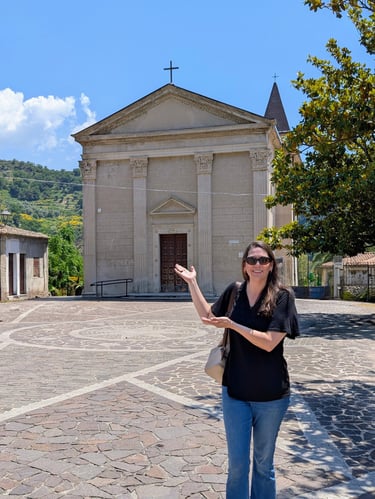
This is me, April, visiting my family's church in Grotteria for the first time
A Little Piece of Everyday Life in Italy
Even if visiting churches isn't normally something you would include on your travel itinerary, I would encourage you to make an exception when traveling through Italy. It's honestly one of my favorite things to do when I'm wandering around an Italian town.
The amount of history and craftsmanship found inside these buildings is absolutely incredible. The architecture alone is worth seeing. You'll often find intricate marble floors, painted ceilings, beautiful frescoes, and elaborate altars.
But I also think there's something special about experiencing the quieter side of Italy. You can spend the morning walking through crowded streets, visiting museums, and enjoying all the activity of a busy Italian city. Then you step inside a church, and here you will experience some peace and quiet (and even cool off a little during the summer heat).
Whether it's a grand cathedral in Florence, a historic basilica in Rome, or a small church in a village in Calabria, take a few minutes to step inside when you have the opportunity. Just remember to dress appropriately, check the opening hours, and be respectful of the people who consider these places an important part of their everyday lives.
After all, experiencing Italy isn't just about seeing all of the famous landmarks. It's also about understanding the traditions, history, and little everyday things that make Italy so special.


Chiesa di San Salvatore in Ognissanti in Florence


Chiesa di Santa Maria di Montevergine in Paola, Calabria, Italy


Santuario di San Rocco in Gioiosa Ionica, Calabria, Italy
Contact
You Can Follow Me Here:
© 2026. All rights reserved.


Benevento
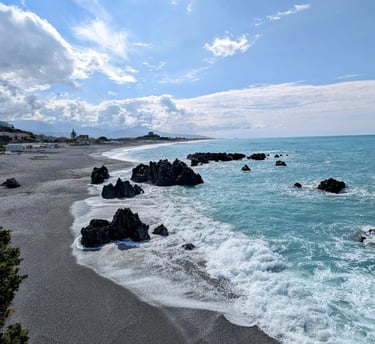
Scalea
Scalea