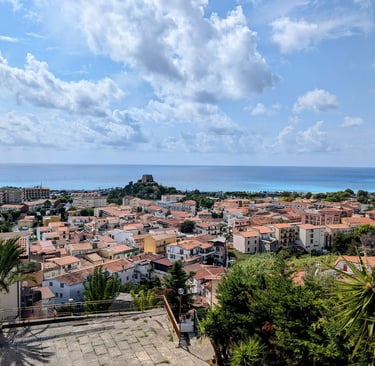
Why Italian Markets Are the Heart of Local Life in Italy
Discover why Italian markets are the heart of local life in Italy. Learn what to expect, what to buy, and tips for enjoying authentic Italian market culture.
4/24/20265 min read
*A little disclaimer: This post contains affiliate links. If you use these links to buy something, I may earn a small commission at no extra cost to you. Thanks!
If you really want to understand life in Italy, don’t start with museums or monuments. Start at the market.
Not the souvenir stands lined with magnets and postcards. I’m talking about the real markets. The ones that take over the town square once a week. The ones where locals show up early with their rolling carts and reusable bags, ready to shop like they’ve done a hundred times before.
Some of my favorite memories in Italy aren’t from famous landmarks. They’re from wandering through markets early in the morning, listening to vendors call out prices, and watching locals carefully inspect tomatoes like they’re choosing gold.
Because in Italy, food matters. Freshness matters. And markets are where it all begins.
Markets Are Woven Into Everyday Life
In many Italian towns, market day isn’t just something that happens; it’s something people plan around.
Each town usually has its own weekly market day. The streets fill with rows of tents and tables, and suddenly the quiet square turns into the busiest place in town.
Locals know exactly when to go. Some arrive early to get the best produce. Others come later to browse clothing or household goods. And plenty of people show up simply because it’s part of their routine.
You’ll see grandmothers picking out vegetables for lunch that same day. Parents buying fruit for the kids. Older men standing nearby chatting about the weather, politics, or whose tomatoes look better that week.
The First Time You Walk Into an Italian Market
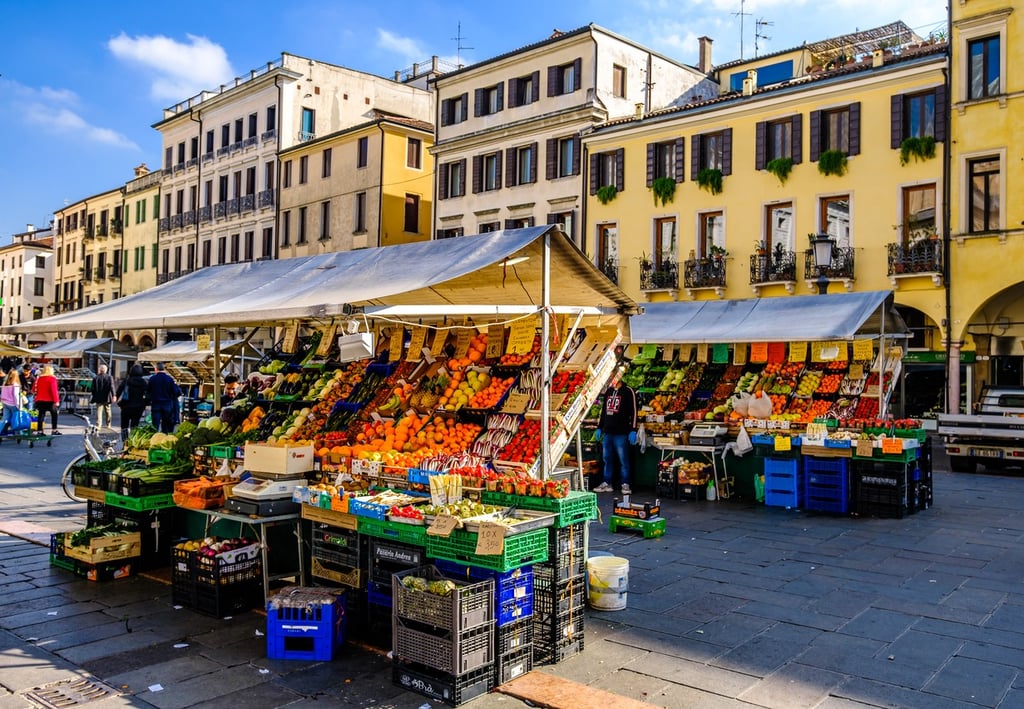
The first thing you notice is the color. Bright red tomatoes stacked into neat pyramids. Deep green zucchini. Bunches of basil tied together with string. Golden peaches piled high in wooden crates. Giant, vibrant bell peppers.
Then comes the smell. Fresh bread. Herbs. Cheese. Sometimes, roasted chicken turning slowly on a spit.
And then the sound. Vendors calling out prices. Customers asking questions. Friends stopping in the middle of the walkway to catch up like they have nowhere else to be. Sometimes there may be a musician/band playing for the crowd.
It’s busy, yes, but it’s not stressful busy. It’s lively busy. The kind that makes you slow down and pay attention instead of rushing through.
It feels alive in a way grocery stores back home just don’t.
What You’ll Find at Italian Markets
Italian markets aren’t just about food ~ although that alone is worth showing up for.
They’re a mix of fresh ingredients, everyday essentials, and sometimes the most unexpected treasures.
Fresh Produce That Actually Tastes Like Something
If you’ve ever wondered why food tastes so good in Italy, markets are a big part of the answer. Everything is seasonal.
You won’t find strawberries year-round like you might in the U.S. Instead, you eat strawberries when they’re actually in season, and they taste like strawberries should.
Summer markets are filled with tomatoes, peaches, melons, and zucchini.
Fall brings figs, mushrooms, pumpkins, and chestnuts.
Winter markets lean toward citrus, leafy greens, and root vegetables.
And spring? That’s when artichokes start showing up everywhere.
You start to notice the rhythm of the seasons just by walking through the stalls.
Cheese and Cured Meats Worth Trying
Cheese lovers, this is your moment.
Markets often have stalls filled with cheeses ranging from soft and fresh to aged and bold. Nearby, you’ll find cured meats like prosciutto, salami, and regional specialties you may not recognize at first but will quickly fall in love with. And in Calabria, you'll find your spicy 'nduja!
Many vendors offer samples if you show interest, and honestly, it’s one of the best ways to discover something new. Don’t be surprised if you leave with more than you planned.
It happens to everyone.
Bread and Baked Goods You Can’t Resist
You can usually smell the bread stand before you even see it.
Rustic loaves, focaccia, and sometimes sweet pastries sit stacked high, still warm from the oven. Even if you’re not planning to buy anything, there’s a good chance you’ll walk away holding a small paper bag with something inside.
Clothing, Shoes, and Everyday Finds
One of the biggest surprises for many visitors is that Italian markets aren’t just about food.
You’ll also find clothing, shoes, kitchen tools, linens, and random household items that locals rely on. Some stalls specialize in simple basics, while others sell quality pieces at really reasonable prices.
It’s not uncommon to see someone picking up fresh vegetables and a new pair of socks in the same trip.
That’s just market life.
The Unwritten Rules of Italian Markets
If it’s your first time visiting a market in Italy, there are a few small things that can feel confusing at first.
But once you know them, everything makes sense.
Don’t Touch the Produce (Most of the Time)
This one surprises a lot of people.
At many produce stalls, you don’t pick up fruits and vegetables yourself. Instead, you point to what you want, and the vendor selects it for you.
It helps keep things moving and keeps produce from getting bruised.
If touching is allowed, you’ll usually see gloves available nearby.
When in doubt, just watch what locals do.
Bring Cash—It Makes Life Easier
While some vendors accept cards now, cash is still very common, especially in smaller towns.
Having small bills and coins makes transactions smoother and faster. Plus, it helps you blend in a little more.
Expect a Bit of Organized Chaos
Markets can feel busy, especially in the late morning.
People talk loudly. Vendors move quickly. Conversations overlap. But somehow, it all works.
Once you settle into the rhythm, it stops feeling chaotic and starts feeling energetic.
Tips for Visiting Italian Markets for the First Time
If you’re planning a trip to Italy, visiting a local market is something I always recommend.
Even if you only have a short time, it’s worth squeezing into your itinerary.
Here are a few simple tips to make the experience smoother.
Go Early for the Best Selection
Markets usually start early in the morning and wrap up around lunchtime.
If you arrive too late, the best items may already be gone. Early mornings also feel calmer, which makes it easier to wander without feeling rushed.
Bring a Reusable Bag
Locals almost always carry their own bags or rolling carts.
It’s practical, environmentally friendly, and honestly, it just makes you look less like a tourist.
Learn a Few Basic Italian Words
You don’t need to be fluent, but simple phrases go a long way.
A quick buongiorno when you approach a vendor or a grazie when you leave makes a big difference.
It shows respect, and vendors notice.
Take a Walk Before You Buy
One of the best things you can do is walk the market once before buying anything.
Prices can vary between stalls, and some vendors specialize in certain items.
Plus, wandering is half the fun.
Why Italian Markets Stay With You Long After You Leave
There’s something about Italian markets that sticks with you.
Maybe it’s the way food is treated with care. Maybe it’s the friendly conversations happening all around you. Maybe it’s the simple joy of choosing fresh ingredients instead of rushing through a grocery store aisle.
Or maybe it’s the reminder that everyday routines can be meaningful.
Markets in Italy aren’t just places to shop. They’re places to connect. To slow down. To be part of something that’s been happening the same way for generations.
And if you ask me, spending a morning at a local market is just as memorable as visiting a famous landmark ~ sometimes even more. So when you arrive in a town in Italy, ask someone when the market is so you don't miss it.
Contact
You Can Follow Me Here:
© 2026. All rights reserved.


Benevento


Scalea
Scalea