What to Eat in Italy by Season: A Food Lover's Guide to Seasonal Italian Foods You Shouldn't Miss
Discover the best seasonal Italian foods to enjoy in spring, summer, fall, and winter so you can eat like a local and experience authentic Italian cuisine.
7/23/20266 min read
One of the biggest mistakes travelers make in Italy is looking for the same foods all year long.
Sure, you can probably find pizza, pasta, and gelato no matter when you visit, but if you really want to eat like the Italians do, pay attention to what's in season.
Italy takes seasonal eating seriously. Restaurants change their menus throughout the year, local markets overflow with whatever is being harvested that month, and many traditional dishes only appear during certain seasons.
It's one of the reasons food tastes so incredibly fresh here.
If you're planning a trip to Italy, here's what you should look for each season so you can experience the country the way locals do.
Why Italians Eat Seasonally
Fresh ingredients aren't just a trend in Italy ~ they're simply the way life has always been.
Most recipes were created around whatever families could grow, harvest, hunt, or buy locally. That tradition continues today. You'll notice restaurants proudly advertising ingredients that are "di stagione" (in season), and many menus change several times throughout the year.
The reward? Better flavor, better quality, and meals that actually reflect the region you're visiting.
One of my favorite things to do is wander through local outdoor markets. Even if I don't buy anything, it's one of the easiest ways to see what's currently in season and discover foods I may never have tried otherwise.
Spring in Italy (March – May)
After winter, Italy comes alive with fresh vegetables, herbs, and lighter dishes.
Everything starts feeling colorful again, and so does the food.
What to Eat
Fresh Asparagus (Asparago)
Asparagus season is short, which makes it extra special. You'll often find it in creamy risotto, pasta dishes, omelets, or simply grilled with olive oil and Parmesan.
Artichokes (Carciofi)
Spring is artichoke season, especially around Rome.
Whether they're stuffed, fried, roasted, grilled, or braised, they're one of Italy's most beloved spring vegetables. When in Rome, you must try Carciofi alla Romana!
Fava Beans (Fave)
Fresh fava beans are everywhere in the spring.
Locals often eat them raw with slices of Pecorino Romano cheese ~ a surprisingly simple combination that's delicious.
Fresh Peas (Piselli)
Peas make their way into pasta, risotto, soups, and seafood dishes during the spring months.
Strawberries (Fragole)
Italian strawberries are incredibly sweet and flavorful. You'll see them served with cream, in pastries, or simply enjoyed fresh.
Lamb (Agnello)
Easter is a major holiday throughout Italy, and roasted lamb is a traditional centerpiece for many family meals.
Summer in Italy (June – August)
Summer is all about simple, refreshing meals made with produce at its absolute peak.
You'll find colorful markets overflowing with fruits and vegetables.
What to Eat
Tomatoes (Pomodori)
If you've only eaten supermarket tomatoes, you're in for a surprise.
Italian summer tomatoes are incredibly sweet, juicy, and full of flavor. Now, I can't say I like fresh tomatoes... I know! I'm weird. I can't take the squishiness. But if I were to enjoy them, it would only happen in Italy.
You'll find them in:
Caprese salad
Bruschetta
Fresh pasta sauces
Panini
Pizza
Peaches (Pesche), Nectarines (Nettarine) & Apricots (Albicocche)
These fruits are everywhere during the summer.
They're sold at markets, roadside fruit stands, and even tiny neighborhood grocery stores.
Melons (Meloni)
Cantaloupe and other sweet melons become a staple.
One classic Italian appetizer is prosciutto e melone ~ thin slices of prosciutto served with fresh melon.
It may sound unusual, but it's absolutely worth trying.
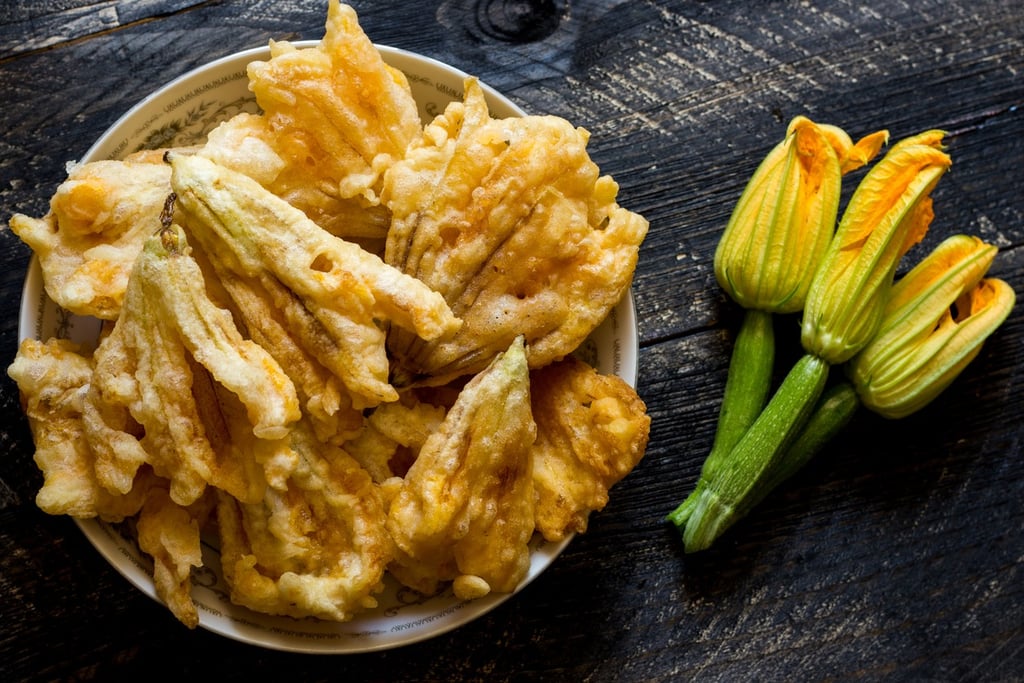
Zucchini (Zucchine) & Zucchini Blossoms (Fiori di Zucca)
The blossoms (fiori di zucca) are especially popular (pictured above).
They're often stuffed with mozzarella and sometimes anchovies before being lightly battered and fried.
They're one of my favorite seasonal treats (minus the anchovies, because I'm kind of a sissy)!
Seafood (Frutti di Mare)
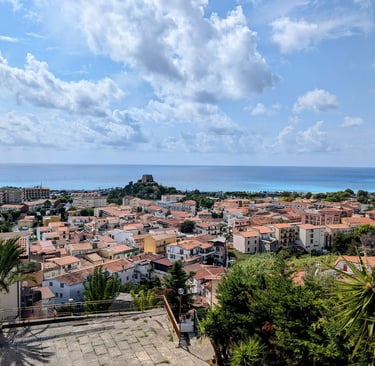
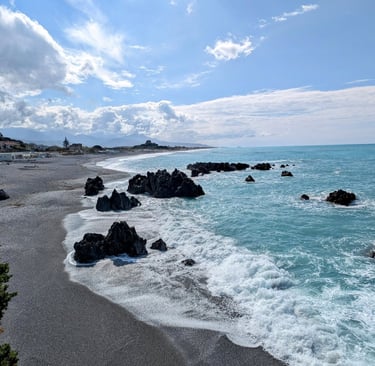
Summer is the perfect time for grilled fish, calamari, octopus, mussels, clams, and seafood pasta along Italy's coastlines, like in Scalea, where my Italian home is.
Whether you're visiting the Amalfi Coast, Sicily, Puglia, Calabria, or any coastal Italian town, you'll find fresh catches on nearly every menu.
Gelato (Of Course!)
Yes, Italians eat gelato year-round, but summer is when it truly shines.
Don't be afraid to branch out beyond chocolate and vanilla.
Some of my favorite flavors include pistachio, stracciatella, lemon, hazelnut, and fresh fig when it's available. Here is a guide I wrote about gelato 101!
Fall in Italy (September – November)
Many Italians will tell you this is the best food season of all.
The weather cools down, harvest season begins, and rich flavors return.
What to Eat
Porcini Mushrooms (Funghi Porcini)
Fresh porcini mushrooms appear in pasta, risotto, sauces, and meat dishes.
They're earthy, rich, and incredibly flavorful.
Truffles (Tartufi)
Autumn is famous for truffle season.
White truffles from northern Italy are especially prized, while black truffles appear in many central and southern regions.
You'll often find them shaved over fresh pasta, eggs, risotto, or steak. Here is a link to a video I took of the epic meal I had in Florence: Truffle tagliatelle in a grana padano cheese wheel. You haven't experienced Italian heaven until you've eaten pasta straight out of a cheese wheel!
Chestnuts (Castagne)
Roasted chestnuts become a common street food as temperatures cool. The smell alone instantly feels like fall in Italy.
Many regions even celebrate chestnuts by giving them their own festival: Sagra delle Castagne.
Pumpkin (Zucca)
Pumpkin begins appearing in ravioli, risotto, soups, and creamy pasta sauces.
Northern Italy is especially known for pumpkin-filled pasta.
Grapes (Uva)
Harvest season means beautiful grapes everywhere.
Many vineyards celebrate with wine festivals, making fall one of the best times for wine lovers to visit Italy.
Figs (Fichi)
Early fall is peak fig season.
Fresh figs paired with prosciutto, soft cheeses, or honey are simple but unforgettable.
Winter in Italy (December – February)
Winter brings hearty comfort food designed to warm you up after exploring chilly streets.
It's also the season filled with holiday traditions.
What to Eat
Polenta
Especially common in northern Italy, creamy polenta is often served with rich meat stews, mushrooms, or melted cheeses.
Hearty Ragù
Winter is perfect for slow-cooked meat sauces served over fresh pasta.
Every region has its own version.
Citrus Fruits
Southern Italy shines during citrus season.
Oranges, lemons, clementines, blood oranges, and mandarins are incredibly sweet this time of year.
If you're visiting Calabria or Sicily, definitely enjoy as much fresh citrus as you can, especially the cedro fruit in Calabria.
Radicchio
This slightly bitter vegetable is commonly grilled, roasted, or added to risotto during the winter months.
Panettone & Pandoro
Around Christmas, you'll see these famous Italian holiday cakes everywhere.
Panettone is filled with candied fruit and raisins, while Pandoro is a buttery, star-shaped cake dusted with powdered sugar.
Even locals debate which one is better.
Regional Foods Matter Too
One thing that's important to remember is that Italy isn't one giant cuisine.
Each region has its own specialties, traditions, and local ingredients.
For example:
Calabria is known for spicy peperoncino, 'nduja, fresh seafood, and sweet red onions.
Emilia-Romagna is famous for Parmigiano Reggiano, prosciutto di Parma, and handmade pasta.
Tuscany is known for bistecca alla Fiorentina, beans, olive oil, and hearty soups.
Sicily offers incredible citrus, pistachio, cannoli, arancini, and seafood.
Puglia is famous for burrata, orecchiette pasta, fresh vegetables, and olive oil.
The season matters, but so does your location.
One of my favorite parts of traveling around Italy is discovering how dramatically the food changes from one region to the next.
Visit Local Markets
If there's one tip I always give visitors, it's this: Visit at least one local market during your trip.
You'll quickly notice what's in season because nearly every stand is selling it.
Markets are also one of the best places to sample local cheeses, cured meats, fresh fruit, olives, breads, and regional specialties.
Even if you don't buy much, they're one of the best ways to experience everyday Italian life.
Eat What the Locals Are Eating
Instead of ordering the same meal you could get back home, look for seasonal specials, ask your server what's local, and be open to trying something new.
You might discover your favorite Italian dish wasn't even on your list before you arrived.
That's one of the things I love most about Italy. Every season brings something different to the table, and every trip gives you a new reason to come back.
Frequently Asked Questions
What food is Italy known for in each season?
Spring is known for asparagus, artichokes, and fava beans. Summer features tomatoes, zucchini blossoms, seafood, and fruits. Fall is famous for truffles, porcini mushrooms, grapes, and chestnuts. Winter brings hearty dishes like polenta, ragù, citrus fruits, and holiday treats like panettone.
What month has the best food in Italy?
There's no single best month because each season offers something unique. Many food lovers prefer September and October for truffles, wine harvests, porcini mushrooms, figs, and grape festivals.
Is it cheaper to eat seasonal food in Italy?
Often, yes. When ingredients are abundant and locally harvested, restaurants and markets typically offer better prices while serving food at its freshest and most flavorful.
Should I order seasonal specials at Italian restaurants?
Absolutely. Seasonal specials are often made with the freshest local ingredients and are one of the best ways to experience authentic regional Italian cuisine.
Every visit to Italy feels a little different depending on the time of year, and every season brings new flavors to discover. So the next time you're planning your Italian adventure, let the season help guide your menu. You may end up trying something you've never even heard of, and it just might become your favorite part of the trip. Buon appetito!


Pasta in a cheese wheel!
Contact
You Can Follow Me Here:
© 2026. All rights reserved.


Benevento

Scalea
Scalea