Italy, Region by Region: Where to Go, What to Eat, and Why You’ll Love It
Explore all 20 regions of Italy with this complete guide to their locations, famous attractions, best towns to visit, traditional foods, local dialects, and unique cultural traditions. A complete Italy travel guide by region.
11/1/202632 min read


(Pictured above: Bellagio) *A little disclaimer: This post contains affiliate links. If you use these links to buy something, I may earn a small commission at no extra cost to you. Thanks!
Italy is one of those countries where you can travel a few hours in almost any direction and feel like you've stepped into an entirely different place! The scenery changes, the food changes, the architecture changes, and sometimes even the language sounds completely different.
From the stunning mountain peaks of the Dolomites in the north to the sun-soaked beaches of Calabria and Sicily in the south, every region has its own personality. Some are known for their incredible food and wine, others for ancient Roman ruins, medieval villages, beautiful coastlines, endless vineyards, or cities filled with art and history. And then there are the smaller towns that you might never have heard of but end up being some of your favorite places in the country.
Italy has 20 regions, and each one has something worth discovering. Whether you're planning your first trip to Italy, returning to explore somewhere new, searching for property to buy, or simply dreaming about spending more time there, understanding the regions is a great place to start.
Let's take a look at all 20 regions of Italy, where they're located, what they're famous for, which towns are worth visiting, and, of course, what you should eat while you're there! Let's go...
A little About How Italy is Divided
Before getting into the individual regions, it helps to understand how the country is laid out. Italy is generally divided into four geographical areas:
Northern Italy: Known for the Alps, lakes, fashion, beautiful cities, vineyards, and some of the country's richest culinary traditions.
Central Italy: Famous for Renaissance art, medieval hilltop towns, countryside, historic cities, and some of Italy's most recognizable landscapes.
Southern Italy: Known for its warmer climate, beautiful coastlines, ancient history, traditional villages, and strong food traditions.
The Islands: Sicily and Sardinia, both with distinct cultures, histories, cuisines, and landscapes.
Italy also has 20 administrative regions, five of which have special autonomous status. Each region is further divided into provinces or metropolitan areas.
One interesting thing about Italy is its dialects. Although Italian is the national language, regional dialects and local languages are still very much part of everyday life in many communities. In fact, some of these local languages are so different from standard Italian that someone from another part of the country might have difficulty understanding them.
It's also worth knowing that what we commonly call an Italian dialect isn't always technically a dialect of standard Italian. Friulian, Sardinian, and several other regional languages have their own distinct linguistic histories. Some areas also have communities that speak German, French, Slovene, or other languages.
Now let's work our way through the country, starting in the north and making our way down to the islands.


Northern Italy
Northern Italy is probably what many people picture when they think of the Italian Alps, Lake Como, Venice, and the beautiful northern countryside. But there's so much more here than mountains and lakes. You'll find medieval cities, incredible food, world-famous wine regions, and some of Italy's most beautiful small towns.
1. Valle d'Aosta (Aosta Valley)
Where it's located: Northwestern Italy, bordering France and Switzerland.
Capital: Aosta
The Aosta Valley is Italy's smallest region, but it certainly doesn't lack beautiful scenery. Located high in the Alps, this region is known for its towering mountain peaks, ski resorts, charming alpine villages, and medieval castles.
Some of Europe's most famous mountains are found here, including Mont Blanc, the Matterhorn, Monte Rosa, and Gran Paradiso. If you enjoy hiking, skiing, mountain biking, or simply taking in beautiful mountain scenery, this is a wonderful part of Italy to visit!
The region also has a fascinating history because of its location between Italy, France, and Switzerland. You'll notice French influences throughout the area, including the architecture, food, and language.
Popular towns and places to visit:
Aosta ~ The regional capital, with impressive Roman ruins, including the Arch of Augustus and a Roman theater.
Courmayeur ~ A beautiful alpine resort town at the foot of Mont Blanc.
Cogne ~ A picturesque mountain village and gateway to Gran Paradiso National Park.
Cervinia ~ A popular ski destination with views of the Matterhorn.
Saint-Vincent ~ Known for its thermal spa and mountain setting.
Famous attractions: City of Aosta, Mont Blanc, Gran Paradiso National Park, the Matterhorn, Fenis Castle, Lago Blu, and the Great St. Bernard Pass.
Regional food: Food here is hearty and comforting, perfect for the colder mountain climate. Some local specialties include Fontina cheese, polenta concia (polenta with melted cheese and butter), carbonade valdostana (wine-braised beef), and lardo di Arnad, a traditional cured pork fat.
Dialect and language: Italian and French are both official languages. You'll also find Franco-Provençal, often called Valdôtain or patois, spoken in local communities.
What makes it special: Aosta is a great region for anyone who loves the mountains and wants a different side of Italy. It feels distinctly Alpine, with a mix of Italian and French traditions.


Blue Lake (Lago Blu), Aosta Valley, Italy
2. Piemonte (Piedmont)
Where it's located: Northwestern Italy, bordering France and Switzerland.
Capital: Turin (Torino)
Piedmont is one of those regions that deserves much more attention from international travelers. It's known for its beautiful countryside, elegant cities, incredible wine, and some of the best food in Italy.
The region is particularly famous for the Langhe, Roero, and Monferrato wine areas, where you'll find rolling vineyards, medieval villages, and wineries producing some of Italy's most prestigious wines. Barolo and Barbaresco are two of the most recognizable names here.
Turin is another highlight. It was once the first capital of unified Italy and is filled with grand boulevards, beautiful palaces, lovely cafes, and historic museums.
Popular towns and places to visit:
Turin ~ Known for its royal palaces, Egyptian Museum, elegant architecture, and chocolate.
Alba ~ Famous for white truffles and its charming historic center.
Barolo ~ A small village surrounded by vineyards and famous wine estates.
Asti ~ Known for sparkling wine, medieval towers, and its historic center.
Stresa ~ A lovely town on Lake Maggiore.
Orta San Giulio ~ A beautiful lakeside village on Lake Orta.
Famous attractions: The Langhe wine region, Lake Maggiore, Lake Orta, the Royal Palace of Turin, Sacra di San Michele, and the Savoy royal residences.
Regional food: Piedmont is a dream for anyone who loves food. Some specialties include tajarin (thin egg pasta), agnolotti del plin (small stuffed pasta), brasato al Barolo (beef braised in Barolo wine), bagna càuda (a warm anchovy and garlic dip), and hazelnut desserts. The region is also famous for white truffles.
Dialect and language: Piedmontese is the traditional regional language, alongside several local varieties. Italian is widely spoken, and Occitan and Franco-Provençal are also present in some mountain communities.
What makes it special: Piedmont is a wonderful choice if you want wine country, beautiful countryside, food experiences, and historic cities without always being surrounded by the crowds you'll find in some of Italy's more famous destinations.


The lovely & historic city of Turin (Torino), Italy
3. Lombardia (Lombardy)
Where it's located: Northern Italy, bordering Switzerland.
Capital: Milan (Milano)
Lombardy is one of Italy's most diverse regions. It's home to Milan, one of the world's fashion and design capitals, but it's also where you'll find some of the country's most beautiful lakes, mountain scenery, and historic towns.
Lake Como is probably the region's most recognizable destination. With its beautiful villas, waterfront promenades, and mountain views, it's easy to see why visitors from around the world flock here (including the actor George Clooney).
But don't overlook Lake Garda, Lake Maggiore, or the smaller towns throughout the region.
Popular towns and places to visit:
Milan ~ Famous for the Duomo, Galleria Vittorio Emanuele II, fashion, shopping, and Leonardo da Vinci's The Last Supper.
Como ~ A beautiful city on the southern end of Lake Como.
Bellagio ~ One of Lake Como's most famous villages.
Varenna ~ A colorful lakeside town with beautiful waterfront views.
Bergamo ~ Known for its gorgeous medieval Città Alta, or upper town.
Brescia ~ Rich in Roman history and beautiful architecture.
Sirmione ~ A popular town on Lake Garda, known for its castle and thermal baths.
Mantua (Mantova) ~ A historic Renaissance city surrounded by lakes.
Famous attractions: Lake Como, Lake Garda, Lake Maggiore, Milan Cathedral, The Last Supper, and the Franciacorta wine region.
Regional food: Lombardy has a wonderful mix of mountain and northern Italian cuisine. Popular dishes include risotto alla Milanese, ossobuco, cotoletta alla Milanese, polenta, pizzoccheri (buckwheat pasta from Valtellina), and panettone.
Dialect and language: Lombard is the traditional regional language, with Western and Eastern varieties. Milanese is one of the best-known local varieties.
What makes it special: Lombardy offers a little bit of everything. You can spend the morning exploring Milan, enjoy lunch overlooking Lake Como, or head into the mountains for a completely different experience.


Limone sul Garda on Lake Garda (Lago di Garda), Italy
4. Trentino-Alto Adige (Trentino-South Tyrol)
Where it's located: Northeastern Italy, bordering Austria and Switzerland.
Capitals: Trento and Bolzano (the region has two autonomous provinces).
This is one of the most interesting regions in Italy because of its strong Austrian and German influences. In fact, depending on where you are, you may hear more German than Italian.
The region is home to the spectacular Dolomites, a UNESCO World Heritage Site, and is one of the most beautiful places in the country for outdoor activities.
In the winter, it's a popular destination for skiing and snowboarding. During the warmer months, hiking, cycling, and visiting the alpine lakes are favorite activities.
Popular towns and places to visit:
Bolzano ~ A charming city with a mix of Italian and Austrian influences.
Trento ~ Known for its historic center, castles, and beautiful mountain setting.
Merano ~ Famous for its thermal baths, gardens, and elegant architecture.
Ortisei ~ A beautiful village in Val Gardena.
Canazei ~ A popular mountain destination in the Dolomites.
Riva del Garda ~ A lovely town on the northern end of Lake Garda.
Famous attractions: The Dolomites, Lago di Braies, Seceda, Val di Funes, Alpe di Siusi, Tre Cime di Lavaredo, and Castel Roncolo.
Regional food: Expect a combination of Italian and Austrian-inspired dishes. Some local favorites include speck (smoked cured ham), canederli (bread dumplings), apple strudel, schlutzkrapfen (stuffed pasta), polenta, and hearty mountain soups.
Dialect and language: Italian and German are widely spoken, depending on the province. Ladin is also spoken in several Dolomite valleys. There are additional local dialects throughout the region.
What makes it special: If you love mountain scenery, beautiful lakes, and a mix of cultures, Trentino-Alto Adige should be on your list. It almost feels like visiting a little piece of Austria while still being in Italy.


Santa Maddalena, Val di Funes, South Tyrol
5. Veneto
Where it's located: Northeastern Italy, bordering Austria and Slovenia.
Capital: Venice (Venezia)
Veneto is one of Italy's most visited regions, and it's easy to understand why. It's home to Verona, Venice, Lake Garda, beautiful countryside, historic villas, and the famous Prosecco wine region.
Venice is obviously the big attraction, but there are so many other places worth visiting. Verona is one of my favorite recommendations for travelers who want a beautiful Italian city with history, architecture, restaurants, and a wonderful atmosphere.
Popular towns and places to visit:
Venice ~ Famous for its canals, gondolas, St. Mark's Square, and beautiful palaces.
Verona ~ Known for the Roman Arena, Juliet's House, and its historic center.
Padua (Padova) ~ Home to the Scrovegni Chapel and one of Europe's oldest universities.
Treviso ~ A charming city with canals and a lovely historic center.
Vicenza ~ Famous for the architecture of Andrea Palladio.
Bassano del Grappa ~ Known for its historic wooden bridge and grappa.
Lazise, Bardolino, and Malcesine ~ Beautiful towns along Lake Garda.
Cortina d'Ampezzo ~ A famous mountain resort in the Dolomites.
Famous attractions: Venice and its lagoon, Murano & Burano, Verona Arena, Lake Garda, the Prosecco Hills, gondola ride in Venice, Palladian Villas, and the Dolomites.
Regional food: Veneto has a delicious variety of dishes. Try risotto al nero di seppia (squid ink risotto), bigoli in salsa (thick pasta with anchovies and onions), baccalà alla vicentina, sarde in saor, tiramisù, and cicchetti, which are small Venetian snacks often enjoyed with a drink.
Dialect and language: Venetian is the traditional regional language, with different local varieties throughout the region. Italian is the national language, and Ladin is also spoken in some mountain communities.
What makes it special: Veneto is a great region for first-time visitors because it combines some of Italy's most famous attractions with smaller cities, lakes, and countryside that are just as memorable.


The sparkling, romantic town of Verona, Italy
6. Friuli-Venezia Giulia
Where it's located: Northeastern Italy, bordering Austria and Slovenia.
Capital: Trieste
Friuli-Venezia Giulia is one of Italy's most overlooked regions, especially by travelers who tend to stick to Venice and the more popular northern destinations.
Located at the crossroads of Italian, Slavic, and Central European cultures, this region has a very different feel from much of the rest of Italy.
Trieste is the main city and is known for its beautiful waterfront, gorgeous architecture, historic coffeehouses, and fascinating history. You'll also find mountains, vineyards, seaside resorts, and charming little villages throughout the region.
Popular towns and places to visit:
Trieste ~ A beautiful coastal city with Austro-Hungarian architecture and a lively cafe culture.
Udine ~ Known for its historic squares and Venetian-style architecture.
Cividale del Friuli ~ A historic town with a beautiful medieval center.
Aquileia ~ Famous for its Roman archaeological sites and ancient basilica mosaics.
Grado ~ A seaside town with beaches and a charming old center.
Gorizia ~ A historic border city with a mix of Italian and Central European influences.
Famous attractions: Miramare Castle, Piazza Unità d'Italia in Trieste, the Aquileia archaeological area, the Julian Alps, and the Collio wine region.
Regional food: Some specialties include frico (a crispy cheese and potato dish), prosciutto di San Daniele, jota (a hearty soup with beans, sauerkraut, and potatoes), goulash, and local seafood. The region also produces excellent wines.
Dialect and language: Friulian is a distinct regional language, not simply a dialect of Italian. Venetian varieties are also spoken in some areas, while Slovene and German-speaking communities can be found in parts of the region.
What makes it special: Friuli-Venezia Giulia is a great region for travelers who want to explore somewhere a little different. The blend of cultures, architecture, food, and landscapes makes Friuli-Venezia Giulia particularly interesting.


Grand Canal in Trieste
7. Liguria
Where it's located: Northwestern Italy, along the Mediterranean coast, bordering France.
Capital: Genoa (Genova)
Liguria is the long, narrow coastal region along the Italian Riviera. It's famous for its colorful seaside villages, beautiful beaches, fresh seafood, and some of the most photographed coastal scenery in Italy.
The Cinque Terre is probably its most recognizable destination, but there are plenty of other beautiful towns to discover.
Genoa is also worth spending time in. It's a historic port city with an impressive old town, beautiful palaces, and a fascinating maritime history.
Popular towns and places to visit:
Genoa ~ Known for its historic port, old town, and grand palaces.
Portofino ~ An elegant seaside village with a beautiful harbor.
Camogli ~ A colorful fishing village with a lovely waterfront.
Santa Margherita Ligure ~ A beautiful coastal town near Portofino.
Rapallo ~ Known for its waterfront and historic center.
Cinque Terre ~ The five famous villages of Monterosso, Vernazza, Corniglia, Manarola, and Riomaggiore.
Sanremo ~ Famous for its flowers, music festival, and seaside atmosphere.
Famous attractions: Cinque Terre National Park, Portofino, the Italian Riviera, Genoa's historic center, and the coastal walking trails.
Regional food: Liguria is the birthplace of pesto alla Genovese, so you'll definitely want to try it here. Other favorites include focaccia, trofie al pesto, farinata (a thin chickpea flatbread), pansoti with walnut sauce, and fresh seafood.
Dialect and language: Ligurian is the traditional regional language, with Genoese being one of its best-known varieties.
What makes it special: Liguria is perfect if you love coastal towns, beautiful scenery, seafood, and spending your days wandering narrow streets before stopping for a long lunch overlooking the water.


The colorful seaside village of Vernazza, Cinque Terre
8. Emilia-Romagna
Where it's located: Northern Italy, between Lombardy, Veneto, Tuscany, Liguria, and the Adriatic Sea.
Capital: Bologna
If you're a food lover, Emilia-Romagna needs to be on your Italy itinerary. This region is often considered one of the country's best culinary destinations, and for good reason.
It's the home of Parmigiano Reggiano, traditional balsamic vinegar, Prosciutto di Parma, and some of the most famous pasta dishes in Italy.
But there's more to the region than food. Bologna is a beautiful university city with miles of historic porticoes, Parma has gorgeous architecture, Modena is known for its food and motor heritage, and Ravenna is famous for its incredible Byzantine mosaics.
Popular towns and places to visit:
Bologna ~ Famous for its porticoes, food markets, medieval towers, and historic university.
Parma ~ Known for Parmesan cheese, prosciutto, and beautiful architecture.
Modena ~ Home to traditional balsamic vinegar and the Ferrari Museum.
Ravenna ~ Famous for its stunning Byzantine mosaics.
Ferrara ~ A beautiful Renaissance city with a historic castle.
Rimini ~ A popular beach destination on the Adriatic coast.
Brisighella ~ A charming medieval village surrounded by hills.
Famous attractions: Historic porticoes of Bologna, Ravenna's mosaics, the Ferrari Museum, the Ducati Museum, and the food-producing areas around Parma and Modena.
Regional food: This is a region where you'll want to arrive hungry. Some of the most famous dishes include tagliatelle al ragù, tortellini in brodo, lasagne verdi, piadina, gnocco fritto, Parmigiano Reggiano, and traditional balsamic vinegar.
Dialect and language: Emilian and Romagnol are the traditional regional language varieties. They belong to the broader northern Italian linguistic group.
What makes it special: Emilia-Romagna is a fantastic region for food-focused travel. You can visit cheese producers, balsamic vinegar makers, pasta workshops, and local markets while exploring some beautiful historic cities.


A foodie's dream town: Bologna
Central Italy
Central Italy is home to some of the country's most recognizable destinations. Think Florence, Tuscany's golden rolling hills, Rome, medieval villages, and beautiful countryside.
It's also a wonderful area for anyone interested in art, architecture, history, and traditional Italian village life.
9. Toscana (Tuscany)
Where it's located: Central Italy, along the Tyrrhenian Sea.
Capital: Florence (Firenze)
Tuscany is probably one of the most recognizable regions in Italy. It's the region many people picture when they imagine the Italian countryside, with rolling hills, vineyards, olive groves, cypress-lined roads, and beautiful stone farmhouses.
Florence is the region's cultural heart and one of the most important cities in the world for Renaissance art and architecture. But I would absolutely recommend exploring beyond Florence if you have the time.
There are so many beautiful little towns throughout Tuscany, and some of the countryside scenery is just as memorable as the famous cities.
Popular towns and places to visit:
Florence ~ Home to the Duomo, Ponte Vecchio, Uffizi Gallery, and Michelangelo's David.
Siena ~ Famous for its medieval architecture and Palio horse race.
Pisa ~ Known for the Leaning Tower.
Lucca ~ A beautiful walled city with tree-lined promenades.
San Gimignano ~ Famous for its medieval towers.
Montepulciano ~ Known for its wine and beautiful hilltop setting.
Pienza ~ A charming Renaissance town in the Val d'Orcia.
Cortona ~ A picturesque hilltop town.
Arezzo ~ Known for its historic center and antique market.
Famous attractions: Florence's historic center, the Leaning Tower of Pisa, Chianti, Val d'Orcia, the Tuscan countryside, Elba Island, and the medieval towns throughout the region.
Regional food: Tuscan cuisine is known for simple ingredients and traditional cooking. Some favorites include bistecca alla Fiorentina, ribollita, pappa al pomodoro, pici pasta, lampredotto (a traditional Florentine street food), and cantucci dipped in Vin Santo.
Dialect and language: Tuscan dialects are historically important because the Florentine variety helped form modern standard Italian. Local Tuscan speech still varies from town to town.
What makes it special: Tuscany is wonderful for a slower-paced trip. Rent a car, explore the countryside, visit wineries, stop in little villages, and enjoy long meals. It's also a great destination for travelers who love history, art, and architecture.


A true Tuscan gem: Siena
10. Umbria
Where it's located: Central Italy, east of Tuscany and north of Lazio. It is one of only two Italian regions without a coastline.
Capital: Perugia
Umbria is often called the Green Heart of Italy, and once you visit, you'll understand why. This region is filled with rolling hills, forests, olive groves, vineyards, medieval towns, and beautiful countryside.
It's sometimes overshadowed by neighboring Tuscany, but I think Umbria deserves just as much attention.
The towns here are full of character, and many have managed to maintain a quieter atmosphere than some of Italy's more heavily visited destinations.
Popular towns and places to visit:
Assisi ~ Famous for the Basilica of Saint Francis.
Perugia ~ A historic university city with beautiful architecture.
Orvieto ~ Known for its impressive cathedral and underground tunnels.
Spello ~ A gorgeous little town famous for its flower displays.
Gubbio ~ A medieval hilltop town with incredible views.
Spoleto ~ Known for its historic center and annual Festival dei Due Mondi.
Norcia ~ Famous for its cured meats and mountain setting.
Famous attractions: Basilica of Saint Francis, Marmore Falls, Lake Trasimeno, Orvieto Cathedral, underground caves in Orvieto, and the countryside around Castelluccio di Norcia.
Regional food: Umbria is known for black truffles, lentils, cured meats, wild boar, strangozzi pasta, porchetta, and torta al testo (a traditional flatbread).
Dialect and language: Umbrian dialects are part of the central Italian linguistic group, although local speech varies considerably across the region.
What makes it special: Umbria is a wonderful choice if you want medieval towns, countryside, food, and a slower pace without the crowds found in some of the more famous Italian destinations.


The Green Heart of Italy: Umbria
11. Le Marche
Where it's located: Central-eastern Italy, along the Adriatic coast, between Emilia-Romagna, Umbria, Abruzzo, and Lazio.
Capital: Ancona
Le Marche is one of those regions that I think more travelers should have on their radar. It has beautiful beaches, rolling countryside, mountains, historic towns, and some incredible architecture.
One of the region's highlights is the Riviera del Conero, where you'll find beautiful beaches tucked beneath dramatic white cliffs.
The inland towns are equally worth exploring. Urbino, in particular, is a beautiful Renaissance city and a UNESCO World Heritage Site.
Popular towns and places to visit:
Ancona ~ The regional capital, with a historic port and beautiful waterfront.
Urbino ~ Famous for its Renaissance architecture and Palazzo Ducale.
Ascoli Piceno ~ Known for its beautiful Piazza del Popolo.
Sirolo ~ A picturesque coastal town along the Riviera del Conero.
Numana ~ A popular seaside destination.
Loreto ~ Famous for its Basilica della Santa Casa.
Recanati ~ The birthplace of poet Giacomo Leopardi.
Gradara ~ A beautiful medieval village with an impressive castle.
Famous attractions: Riviera del Conero, Frasassi Caves, Urbino's historic center, Mount Sibillini National Park, and Gradara Castle.
Regional food: Try olive all'ascolana (fried stuffed olives), vincisgrassi (a rich baked pasta dish), brodetto (Adriatic fish stew), crescia, and ciauscolo, a soft spreadable salami.
Dialect and language: The traditional dialects are generally grouped under Marchigiano, although the language changes quite a bit from the northern part of the region to the south. Some northern varieties have stronger ties to the northern Italian dialect group.
What makes it special: Marche is a great option if you want a mix of beach destinations, beautiful historic villages, and countryside without following the same tourist routes as everyone else.


Church of Santa Maria della Consolazione in Todi, Umbria
12. Lazio
Where it's located: Central-western Italy, along the Tyrrhenian Sea.
Capital: Rome (Roma)
Lazio is probably best known for Rome, and it's hard to argue with that. The Italian capital is one of the most historically important cities in the world, with ancient ruins, incredible churches, beautiful piazzas, and enough attractions to keep you busy for weeks.
But Lazio is much more than Rome. There are beautiful coastal towns, volcanic lakes, medieval villages, gardens, and historic sites throughout the region. If you're visiting Rome for more than a few days, it's worth considering a day trip or two outside the city.
Popular towns and places to visit:
Rome ~ Home to the Colosseum, Roman Forum, Pantheon, Trevi Fountain, and Vatican City.
Tivoli ~ Famous for Villa d'Este and Hadrian's Villa.
Civita di Bagnoregio ~ A spectacular hilltop village reached by a pedestrian bridge.
Viterbo ~ A medieval city with a beautiful historic center.
Sperlonga ~ A gorgeous seaside town with whitewashed buildings.
Gaeta ~ Known for its beaches, historic center, and coastal scenery.
Bracciano ~ A lakeside town with an impressive medieval castle.
Frascati ~ A lovely town in the Castelli Romani wine area.
Famous attractions: The Colosseum, Vatican Museums, Roman Forum, Villa d'Este, Hadrian's Villa, Lake Bolsena, Tivoli Gardens, and the Appian Way.
Regional food: Lazio is home to some of Italy's most famous pasta dishes, including carbonara, cacio e pepe, amatriciana, and gricia. Other favorites include saltimbocca alla Romana, carciofi alla Romana, and porchetta.
Dialect and language: Romanesco is the best-known local variety, especially in Rome. Other areas of Lazio have different local dialects, including varieties influenced by neighboring central and southern Italian speech.
What makes it special: Lazio is a must for history lovers, but don't limit your visit to Rome. Some of the smaller towns and coastal areas are wonderful places to explore.


Gorgeus view of the Tiber River, Ponte Sant'Angelo & Saint Peter's Basilica in Rome, Italy
Southern Italy
Southern Italy has a personality all its own. The pace of life, food, architecture, landscapes, and traditions can feel quite different from what you'll experience in the north. But honestly, it's my all-time favorite region of Italy!
This is where you'll find some of Italy's most beautiful coastlines, ancient Greek and Roman history, whitewashed villages, mountain communities, and incredible regional food.
Traditions are still an integral aspect of everyday life. Family, food, local festivals, and spending time in the piazza are very important parts of many communities.
13. Abruzzo
Where it's located: Central-eastern Italy, along the Adriatic coast, east of Lazio.
Capital: L'Aquila
Abruzzo is one of Italy's most underrated regions. It's known for its beautiful national parks, mountain villages, traditional food, and Adriatic beaches.
One of the things that makes Abruzzo so interesting is how much variety you'll find in one region. You can spend the morning hiking in the mountains and the afternoon relaxing on the beach.
Much of the region is mountainous, and it's home to some of the highest peaks in the Apennines. You'll also find charming medieval villages that seem almost untouched by time.
Popular towns and places to visit:
L'Aquila ~ The regional capital, known for its historic architecture and Basilica of Collemaggio.
Sulmona ~ Famous for its colorful sugared almonds called confetti.
Scanno ~ A beautiful mountain village with a picturesque lake.
Pescara ~ A popular seaside city with beaches and a lively waterfront.
Santo Stefano di Sessanio ~ A beautifully preserved medieval village.
Rocca Calascio ~ Known for its spectacular mountaintop fortress.
Vasto ~ A lovely coastal town overlooking the Adriatic Sea.
Famous attractions: Gran Sasso National Park, Majella National Park, Rocca Calascio, Lago di Scanno, the Costa dei Trabocchi, known for its traditional fishing platforms extending into the sea, and Piazza Garibaldi in Sulmona.
Regional food: Abruzzo is famous for arrosticini, small skewers of grilled lamb, as well as maccheroni alla chitarra, scrippelle, pallotte cacio e ova (cheese and egg balls), and confetti from Sulmona. The region also produces Montepulciano d'Abruzzo wine.
Dialect and language: Abruzzese is the general name for the region's traditional dialect varieties. There are differences between coastal, inland, and mountain communities.
What makes it special: Abruzzo is a wonderful destination for travelers who love nature, mountains, small villages, and traditional Italian food. It's also a great option if you're looking for somewhere a little less crowded.


Pescara sits between sandy beaches and incredible mountain peaks
14. Molise
Where it's located: Southern-central Italy, along the Adriatic Sea, between Abruzzo, Lazio, Campania, and Puglia.
Capital: Campobasso
Molise is one of the smallest and least-visited regions in Italy. You may have even heard the running joke that Molise doesn't exist! Italians sometimes use this expression because the region is so often overlooked.
But it absolutely exists, and it has plenty to offer. Molise is a quieter part of Italy with mountains, rolling countryside, historic villages, archaeological sites, and a small stretch of Adriatic coastline.
It's a great region for travelers who want to get away from the more crowded tourist destinations and experience a different side of Italy.
Popular towns and places to visit:
Termoli ~ A beautiful seaside town with a historic center and fishing harbor.
Campobasso ~ The regional capital, known for its medieval castle and historic streets.
Isernia ~ An ancient town with a fascinating archaeological history.
Agnone ~ Famous for its traditional bell-making foundry.
Venafro ~ Known for its olive groves and historic center.
Sepino ~ Home to the ancient Roman archaeological site of Saepinum.
Larino ~ A historic town with an impressive Roman amphitheater.
Famous attractions: Ancient Saepinum, the Pontificia Fonderia Marinelli bell foundry, the beaches of Termoli, vineyard & winery tour, and the archaeological sites of Pietrabbondante.
Regional food: Molise has a wonderful traditional cuisine based on simple ingredients. Some local specialties include cavatelli pasta, pampanella (spiced roasted pork), taccozze e fagioli (pasta and bean soup), grilled lamb, and local cheeses. The region also produces excellent olive oil.
Dialect and language: Molisan is the general term for the local dialect varieties. There are also small communities that preserve Croatian and Albanian linguistic traditions.
What makes it special: Molise is for travelers who enjoy discovering places that aren't necessarily on everyone's itinerary. If you want a more relaxed experience and a chance to explore traditional Italian villages, put this one on your list.


The beautiful beach of Termoli, Molise
15. Campania
Where it's located: Southern Italy, along the Tyrrhenian Sea.
Capital: Naples (Napoli)
Campania is one of Italy's most famous regions, and it has an incredible combination of history, food, coastal scenery, and beautiful towns.
Naples is the heart of the region and is known for its lively streets, incredible pizza, historic churches, and fascinating culture. It's also one of the most important cities in Italy for understanding the country's culinary traditions.
Then there's the Amalfi Coast, Mount Vesuvius, Pompeii, Capri, and the beautiful islands of the Gulf of Naples.
You could easily spend a couple of weeks exploring this region and still have places left to discover.
Popular towns and places to visit:
Naples ~ Famous for pizza, historic churches, underground tunnels, and its lively atmosphere.
Positano ~ One of the most photographed towns along the Amalfi Coast.
Amalfi ~ Known for its beautiful cathedral and coastal setting.
Ravello ~ Famous for its gardens and spectacular sea views.
Sorrento ~ A popular coastal town known for lemons and beautiful views of the Bay of Naples.
Capri ~ An island famous for its scenery, boutiques, and Blue Grotto.
Ischia ~ An island known for its beaches and thermal spas.
Procida ~ A colorful island with a charming fishing village atmosphere.
Salerno ~ A historic coastal city and a convenient base for exploring the region.
Paestum ~ Home to some of the best-preserved ancient Greek temples in Italy.
Benevento ~ A lovely little town known for its legend of witches.
Famous attractions: Pompeii, Herculaneum, Mount Vesuvius, the Amalfi Coast, Capri, the Royal Palace of Caserta, and the archaeological sites of Paestum.
Regional food: Campania is the birthplace of Neapolitan pizza, so that's an obvious must-try. Other specialties include spaghetti alle vongole, gnocchi alla Sorrentina, pasta e patate, mozzarella di bufala, sfogliatelle, babà, and delizia al limone.
Dialect and language: Neapolitan is the best-known traditional language variety, although there are many local dialects throughout Campania. The Neapolitan language has a rich literary and musical history.
What makes it special: Campania is one of the best regions for combining history, food, beaches, and coastal scenery. Whether you're exploring the ruins of Pompeii or enjoying a seafood dinner overlooking the water, there's something memorable around every corner.


The bright & colorful island of Procida
16. Puglia (Apulia)
Where it's located: Southeastern Italy, forming the heel of the Italian boot, with coastlines along both the Adriatic and Ionian seas.
Capital: Bari
Puglia has become increasingly popular with international travelers, and it's easy to see why. The region is known for its whitewashed towns, beautiful beaches, olive groves, traditional stone houses, and incredible food.
One of the most recognizable sights in Puglia is the trulli of Alberobello. These unique stone houses with cone-shaped roofs are unlike anything else you'll find in Italy.
The region is also home to the Salento peninsula, which has some beautiful white, sandy beaches and charming coastal towns.
Popular towns and places to visit:
Bari ~ The regional capital, famous for its old town and traditional pasta-making streets.
Alberobello ~ Famous for its UNESCO-listed trulli houses.
Polignano a Mare ~ A gorgeous coastal town built along dramatic cliffs.
Monopoli ~ Known for its historic harbor and beautiful old town.
Ostuni ~ Often called the White City because of its whitewashed buildings.
Lecce ~ Famous for its elaborate Baroque architecture.
Otranto ~ A beautiful coastal town with a historic castle and cathedral.
Gallipoli ~ A popular seaside destination on the Ionian coast.
Locorotondo ~ A lovely hilltop town in the Valle d'Itria.
Martina Franca ~ Known for its elegant Baroque architecture.
Famous attractions: Alberobello's trulli, Castel del Monte, the Valle d'Itria, the beaches of Salento, Polignano a Mare, and the Gargano Peninsula.
Regional food: Puglia is known for orecchiette pasta, often served with broccoli rabe, burrata, focaccia barese, friselle, panzerotti, bombette (small stuffed meat rolls), and fresh seafood. You'll also find wonderful olive oil and wines throughout the region.
Dialect and language: Pugliese is a broad term for several local varieties, but there are important differences between northern and central Puglia and the Salento area. Salentino is particularly distinctive. Some communities in the region also preserve Griko, a Greek-related language variety.
What makes it special: Puglia is a wonderful region for a road trip. You can explore whitewashed towns, visit beautiful beaches, enjoy long lunches, and spend your evenings wandering through historic centers. It's also a great destination for anyone who loves traditional Italian architecture.


The incredible trulli of Alberobello, Puglia
17. Basilicata
Where it's located: Southern Italy, between Campania, Puglia, and Calabria. It has coastlines along both the Tyrrhenian and Ionian seas.
Capital: Potenza
Basilicata is another region that doesn't always get the attention it deserves. It's one of Italy's smaller regions, but it has some incredibly beautiful landscapes and one of the country's most extraordinary historic destinations.
Matera is the big attraction here. Its ancient cave dwellings, known as the Sassi, have been inhabited for thousands of years and create one of the most unusual and beautiful cityscapes in Italy.
But Basilicata has much more to offer, including mountain villages, gorgeous coastlines, and quiet countryside.
Popular towns and places to visit:
Matera ~ Famous for its ancient cave dwellings and UNESCO-listed Sassi.
Potenza ~ The regional capital, located high in the mountains.
Maratea ~ A beautiful coastal town known for its beaches and Christ the Redeemer statue.
Castelmezzano ~ A spectacular village nestled in the Lucanian Dolomites.
Pietrapertosa ~ A picturesque mountain village with incredible views.
Rivello ~ A medieval town that looks like it's clutchy to the side of the moutnain.
Venosa ~ Known for its Roman ruins and historic architecture.
Melfi ~ Home to an impressive medieval castle.
Famous attractions: The Sassi of Matera, the Lucanian Dolomites, Pollino National Park, the Christ the Redeemer statue in Maratea, and the coastlines along the Ionian and Tyrrhenian seas.
Regional food: Basilicata has a wonderful traditional food culture. Some specialties include peperoni cruschi (crispy dried sweet peppers), lucanica sausage, pane di Matera, orecchiette, lagane e ceci (pasta with chickpeas), and lamb dishes. Aglianico del Vulture is one of the region's best-known wines.
Dialect and language: Lucanian is the general term for the traditional dialect varieties of Basilicata. Arbëreshë, a form of Albanian, is also preserved in several communities.
What makes it special: Basilicata is a fantastic region for travelers who enjoy history, dramatic landscapes, and places that feel a little different from the usual Italian tourist destinations. Matera alone is worth the trip.
The ancient town of Matera in Basilicata known for cave dwellings


18. Calabria
Where it's located: The southernmost part of mainland Italy, forming the toe of the Italian boot. It is surrounded by the Tyrrhenian Sea to the west and the Ionian Sea to the east.
Capital: Catanzaro
Calabria holds a special place in my heart, so I may be a little biased when it comes to this region. It's where my Italian family came from and where I purchased my Italian home.
Located at the very bottom of the Italian peninsula, Calabria is known for its beautiful beaches, mountain villages, ancient history, traditional food, and incredibly welcoming communities.
It's a region where you can spend the morning on a beautiful beach, drive inland to a mountain village for lunch, and end your day enjoying a passeggiata through the piazza with a gelato.
Calabria is also home to some of Italy's most beautiful coastal scenery. Tropea is probably the region's most recognizable destination, but there are so many other towns worth discovering.
Popular towns and places to visit:
Tropea ~ Famous for its dramatic cliffs, beautiful beaches, and Santa Maria dell'Isola.
Scilla ~ A gorgeous fishing village known for its Chianalea waterfront.
Pizzo ~ Famous for tartufo gelato and its historic center.
Reggio Calabria ~ Known for its beautiful waterfront and the Riace Bronzes.
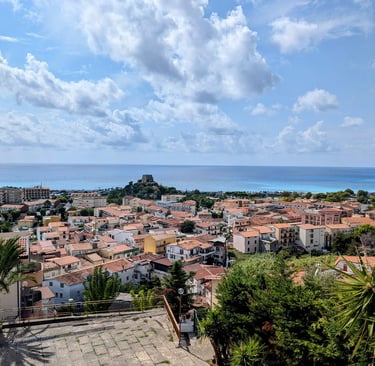
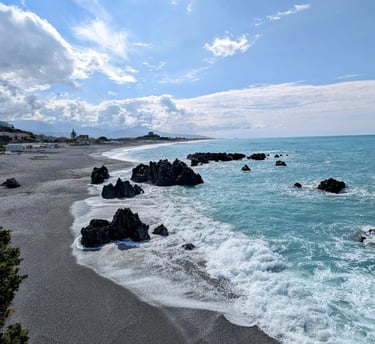
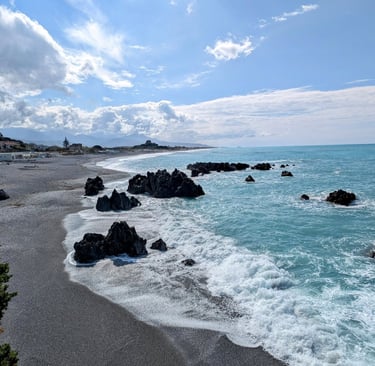
Scalea ~ A coastal town with a charming historic center, beaches, and views of the Tyrrhenian Sea.
Diamante ~ Famous for its murals and peperoncino festival.
Morano Calabro ~ A rustic hilltop town with incredible views.
Gerace ~ A beautiful medieval hilltop town with an impressive cathedral.
Stilo ~ Known for the remarkable Cattolica Byzantine church.
Santa Severina ~ A beautiful village with an impressive castle.
Soverato ~ A popular seaside destination along the Ionian coast.
Famous attractions: Tropea, Capo Vaticano, the Riace Bronzes, Sila National Park, Pollino National Park, Aspromonte National Park, the caves & beaches of the Costa degli Dei, and the historic villages of Gerace and Stilo.
Regional food: Calabrian food is full of bold flavors, fresh ingredients, and a little heat! The region is famous for 'nduja, a spicy spreadable pork sausage, cipolla rossa di Tropea (Tropea red onions), peperoncino, fileja pasta, sardella, soppressata, and bergamot from the Reggio Calabria area.
Dialect and language: Calabrian dialects vary considerably between the northern and southern parts of the region. Northern varieties have more similarities with other southern Italian dialects, while central and southern varieties have stronger Sicilian linguistic influences. Some communities also preserve Greek and Occitan linguistic traditions.
What makes it special: Calabria is a wonderful region for travelers who want beautiful beaches, traditional Italian villages, incredible food, and a more relaxed experience. It may not have the same international recognition as Tuscany or the Amalfi Coast, but that's part of its charm. There is so much to discover here, especially once you venture beyond the most popular coastal destinations.


Calabria's most popular destination: Tropea
The Italian Islands
Italy's two largest islands are very different from one another, and both have strong cultural identities that make them feel like destinations all their own.
Sicily has been influenced by Greek, Roman, Arab, Norman, and Spanish civilizations, while Sardinia has a particularly distinct history, language, and ancient archaeological heritage.
If you have the time, both are worth exploring separately rather than trying to squeeze them into a mainland Italy itinerary.
19. Sicilia (Sicily)
Where it's located: Southern Italy, the large island just off the toe of mainland Italy, separated from Calabria by the Strait of Messina.
Capital: Palermo
Sicily is the largest island in the Mediterranean and one of the most culturally fascinating places in Italy.
Because of its location, Sicily has been influenced by many different civilizations throughout history. You'll see Greek temples, Roman ruins, Arab-Norman architecture, Baroque towns, and traditions that are uniquely Sicilian.
The scenery is just as diverse. There are beautiful beaches, impressive cliffs, historic cities, vineyards, and Mount Etna, one of the world's most active volcanoes.
Popular towns and places to visit:
Palermo ~ The island's capital, known for its markets, street food, churches, and architecture.
Taormina ~ A beautiful hilltop town with views of Mount Etna and the sea.
Catania ~ A lively city at the foot of Mount Etna.
Syracuse (Siracusa) ~ Famous for its beautiful Ortigia island and Greek history.
Cefalù ~ A gorgeous seaside town with a medieval center.
Noto ~ Known for its spectacular Baroque architecture.
Ragusa ~ A beautiful historic town with incredible architecture.
Modica ~ Famous for its traditional chocolate.
Agrigento ~ Home to the Valley of the Temples.
Trapani ~ A coastal city and gateway to the Egadi Islands.
Famous attractions: Mount Etna, Valley of the Temples, Alcantara Gorges, the Greek Theater of Taormina, Ortigia, the Baroque towns of the Val di Noto, Scala dei Turchi, and the Aeolian Islands.
Regional food: Sicilian cuisine is one of the most recognizable in Italy. Some must-try foods include arancini (fried rice balls), pasta alla Norma, pasta con le sarde, caponata, cannoli, cassata, granita with brioche, and panelle (chickpea fritters).
Dialect and language: Sicilian is a distinct regional language with a long history and influences from several civilizations. Local varieties differ across the island. Italian is also widely spoken.
What makes it special: Sicily is a destination where history, food, beaches, and culture all come together. You could easily spend weeks exploring the island, and I would recommend planning separate trips for the eastern and western sides if you want to see more than just the highlights.


The beautiful Baroque-stye town of Ragusa, Sicily
20. Sardegna (Sardinia)
Where it's located: West of mainland Italy, in the Mediterranean Sea, south of Corsica.
Capital: Cagliari
Sardinia is famous for having some of the most beautiful beaches in Europe. Think turquoise water, white sand, dramatic rock formations, and secluded coves that look almost tropical. But Sardinia is so much more than its beaches.
The island has a fascinating ancient history, with thousands of prehistoric stone structures known as nuraghi scattered throughout the landscape. It also has traditional mountain villages, beautiful historic cities, and a food culture that's quite different from mainland Italy.
Popular towns and places to visit:
Cagliari ~ The island's capital, known for its historic Castello district and waterfront.
Alghero ~ A beautiful coastal city with Catalan influences.
Olbia ~ A popular gateway to the Costa Smeralda.
Bosa ~ A colorful riverside town with a medieval castle.
Castelsardo ~ A beautiful hilltop village overlooking the sea.
San Teodoro ~ Known for its stunning beaches.
Villasimius ~ A popular beach destination in southern Sardinia.
Orgosolo ~ Famous for its political murals and mountain setting.
Famous attractions: Boat tours to Costa Smeralda, La Pelosa Beach, Cala Goloritzé, the Devil's Saddle, the Maddalena Archipelago, Su Nuraxi di Barumini, and the Gulf of Orosei.
Regional food: Sardinian food is full of traditional dishes that reflect the island's pastoral and coastal heritage. Some favorites include porceddu (roasted suckling pig), culurgiones (stuffed pasta), malloreddus (Sardinian pasta), pane carasau (thin, crispy flatbread), bottarga, pecorino sardo, and seadas (a fried pastry filled with cheese and drizzled with honey).
Dialect and language: Sardinian is a distinct Romance language, not simply an Italian dialect. It has several major varieties, including Logudorese and Campidanese. Gallurese, Sassarese, and Catalan in Alghero are also part of the island's linguistic picture.
What makes it special: Sardinia is perfect for beach lovers, nature enthusiasts, and travelers interested in ancient history. It has a very different feel from mainland Italy, and its local traditions make it a fascinating place to explore.


Breathtaking view of Cala Corsara, Sardinia
Which Region of Italy Should You Visit?
With 20 regions to choose from, deciding where to go can feel a little overwhelming. The good news is that there's really no wrong choice. It just depends on what kind of experience you're looking for.
Which Region of Italy Should You Visit?
With 20 regions to choose from, deciding where to go can feel a little overwhelming. The good news is that there's really no wrong choice. It just depends on what kind of experience you're looking for.
Here are a few ideas to help narrow it down:
If you love beautiful lakes and mountain scenery: Visit Lombardy, Veneto, or Trentino-Alto Adige.
If you love wine, vineyards, and rolling countryside: Consider Tuscany, Piedmont, or Umbria.
If you love beaches and colorful coastal villages: Explore Liguria, Puglia, Calabria, or Sardinia.
If you're interested in ancient history and archaeological sites: Put Lazio, Campania, and Sicily on your list.
If you enjoy medieval villages and quieter countryside: Take a look at Umbria, Marche, Abruzzo, or Molise.
If food is a big part of your travel experience: Emilia-Romagna, Campania, and Puglia are wonderful choices.
If you love beautiful Baroque architecture: Don't miss Sicily and Puglia.
If hiking and outdoor adventures are more your style: Consider Valle d'Aosta, Abruzzo, Calabria, or Sardinia.
If you want a little bit of everything: Tuscany, Campania, and Sicily offer a wonderful mix of history, food, scenery, and culture.
A Few Things to Know Before Traveling Around Italy
You don't have to see everything in one trip. Italy might look small compared to the United States, but traveling between regions can take longer than you think. I always recommend choosing a few areas and spending enough time in each one rather than trying to fit too many destinations into one itinerary.
Consider renting a car: Trains are a wonderful way to travel between many of Italy's larger cities, particularly in the north and central regions. However, if you want to explore smaller villages, countryside destinations, and less accessible coastal areas, renting a car can make a big difference. But make sure you add an international plan to your cell phone or buy a SIM card so you have access to Google maps.
Food is regional: One of my favorite things about traveling around Italy is discovering how much the food changes from one region to another. Don't assume you'll find the same dishes everywhere. Try the local specialties, visit neighborhood restaurants, and don't be afraid to ask what the regional dish is.
Learn a little about the local language: Standard Italian will get you through most of the country, but you may hear completely different words and expressions in local dialects. It's part of what makes Italy so interesting. Learning a few simple Italian phrases will go a long way, and locals generally appreciate the effort.
Don't overlook the smaller regions: Everyone wants to visit Rome, Venice, Florence, and the Amalfi Coast, and those places are absolutely worth seeing. But some of my favorite experiences in Italy have come from exploring smaller towns and regions that don't always get the same attention.


The unique heart-shaped lake in Scanno, Abruzzo
Is There a Best Region of Italy?
I don't think there's one answer to this question. Every region offers something different, and what makes one person's favorite might not be what another traveler is looking for.
If you love art, history, and beautiful countryside, Tuscany might be your perfect destination. If you love beaches and coastal villages, you might fall in love with Puglia or Calabria. If food is your biggest reason for traveling, Emilia-Romagna should be high on your list.
One of the things I love most about Italy is that there is always another town to discover, another regional dish to try, another beautiful coastline to explore, or another little piazza where you can sit with a coffee, people watch, and experience everyday Italian life unfold.
Italy isn't just one destination. It's 20 very different regions, each with its own history, traditions, food, and personality. And that's a pretty wonderful reason to keep going back!


The famous Trevi Fountain in Rome, Lazio


The incredible rolling hills of San Quirico, Tuscany


The stunning beach town of Cefalù, Sicily


A hidden gem in the hills of Basilicata, Rivello


The unmissable city of Florence, Italy in Tuscany
Contact
You Can Follow Me Here:
© 2026. All rights reserved.


Benevento
Scalea
Scalea